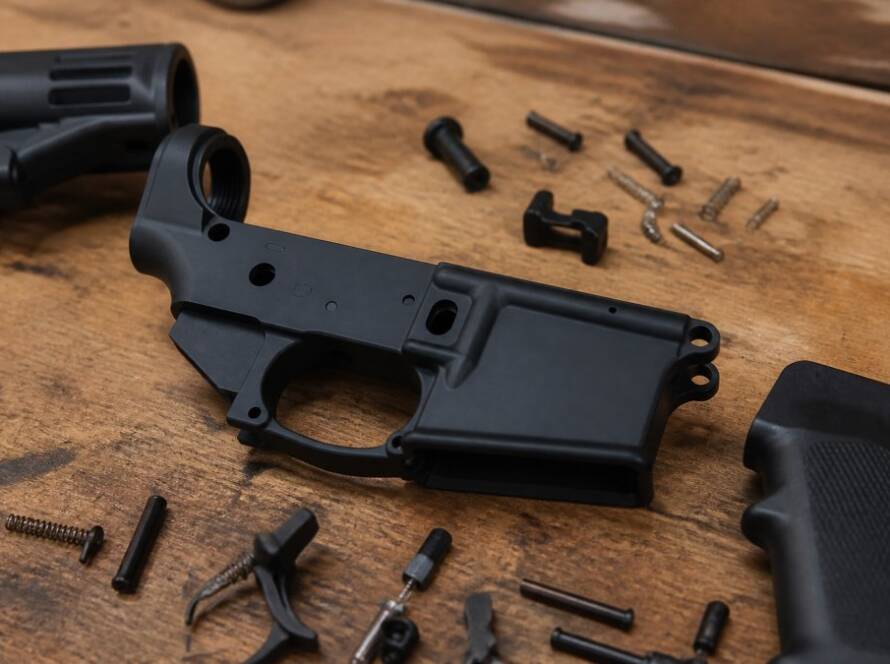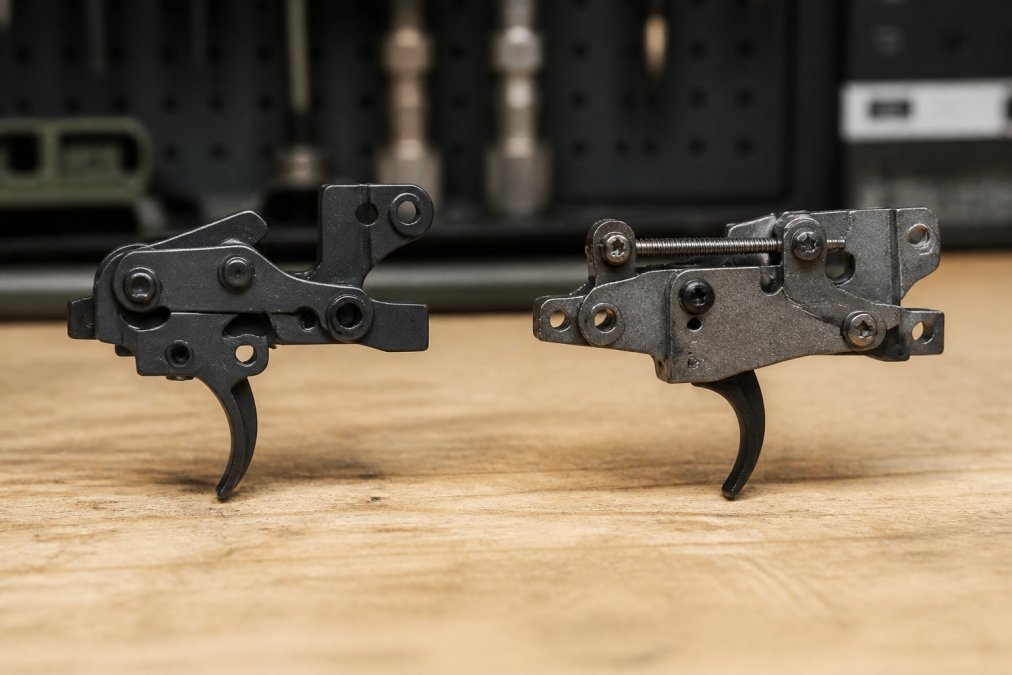
Table of Contents
- NDZ Performance vs Custom Triggers: What Sets Them Apart
- Trigger Pull Weight and Clean Break: Understanding the Performance Difference
- Glock Trigger Upgrade Safety Considerations
- Drop-In Trigger vs Trigger Shoe: Which Approach Wins
- How to Install Custom Triggers: Step-by-Step for Your Platform
- Carry vs Competition: Choosing Your Trigger for Real-World Use
- Long-Term Wear and Durability: What Holds Up
- Conclusion
Last Updated: August 26, 2026
NDZ Performance vs Custom Triggers: What Sets Them Apart
When you’re building or upgrading a firearm, the trigger is where precision meets feel. The difference between a factory trigger and a quality aftermarket upgrade can shift your entire shooting experience, how fast you recover between shots, how confidently you break the trigger, whether you’re competitive or just carrying. But not all aftermarket triggers deliver the same value, and the choice between NDZ Performance and other custom trigger options depends on what you’re actually trying to achieve.
At Polymer Pew, we’ve spent considerable time analyzing trigger performance across different platforms and use cases. The reality is that trigger upgrades fall into a spectrum: some prioritize speed and light pull weight for competition, others emphasize safety and reliability for carry, and a few try to do both. NDZ Performance triggers and custom trigger alternatives each occupy different positions on that spectrum, and understanding where they excel, and where they fall short, is the only way to make the right choice for your platform.
The core question isn’t which trigger is universally "better." It’s which trigger aligns with your specific shooting discipline, your platform, and your tolerance for trade-offs.
Trigger Pull Weight and Clean Break: Understanding the Performance Difference
The trigger pull weight, the amount of force required to fire the round, is one of the most noticeable performance metrics. A clean break means the sear releases without perceptible creep or movement before the shot breaks. These two characteristics are where custom triggers diverge most sharply from factory options and from each other.
NDZ Performance triggers typically offer pull weights in the 3.5 to 5-pound range, depending on the platform and model (peer-reviewed research). A clean break at this weight feels crisp and predictable. You know exactly when the shot is going to break. Custom triggers from established manufacturers like Apex Tactical and TriggerTech often deliver similarly clean breaks, though their pull weight specifications and consistency vary by design philosophy.
The practical difference emerges when you consider reset distance, how far the trigger travels forward after firing before it resets and is ready for the next shot. A shorter reset means faster follow-up shots. This is where competition-focused triggers like the Timney Alpha Series shine: they’re engineered to minimize overtravel and reset distance, giving competitive shooters a measurable edge in speed events. Apex Tactical’s Gen 5 Action Enhancement Kit reduces pre-travel and overall travel while maintaining factory safety values, making it a strong choice for shooters who want performance without sacrificing security (peer-reviewed research).
The trade-off is real, though. Lighter pull weights and shorter resets can feel twitchy during high-stress situations. Carry-focused shooters often prefer slightly heavier pulls, 4.5 to 5.5 pounds, because the extra resistance reduces the chance of an unintended discharge under stress or in a defensive situation (the CDC). This is where NDZ Performance and duty-oriented custom triggers like the TriggerTech AR-15 Duty Trigger find their niche. They prioritize mechanical consistency over absolute speed.
Glock Trigger Upgrade Safety Considerations
Safety isn’t something you compromise on, and this is where Glock trigger upgrades demand serious scrutiny. The factory Glock trigger incorporates a mechanical safety lever that prevents the firing pin from moving forward unless the trigger is deliberately pressed. When you install a custom trigger, you’re replacing this safety mechanism with an alternative design.
Most quality aftermarket triggers maintain or exceed factory safety standards. Apex Tactical‘s Gen 5 kit, for example, uses a center-mounted, pivoting safety that maintains factory safety values. This means you’re not losing any security, you’re getting better performance with equivalent protection. However, some competition-focused triggers sacrifice this standard. The Timney Alpha Series, for instance, includes a competition striker spring that’s lighter and faster but is explicitly not recommended for duty or self-defense use.
The risk is real: a lighter safety mechanism combined with a lighter trigger pull can create unintended discharge scenarios, especially under stress or during rapid manipulation. This is why NDZ Performance triggers marketed for carry use include strong safety features, they’re designed for shooters who need to trust their firearm in a defensive situation, not just on the range.
Before installing any custom trigger, verify that it maintains the factory safety standard for your platform. If the manufacturer doesn’t explicitly state that their trigger meets or exceeds OEM safety specifications, treat that as a red flag. Your life depends on that trigger not firing when you don’t intend it to.
Drop-In Trigger vs Trigger Shoe: Which Approach Wins
The installation method matters more than many shooters realize. A drop-in trigger is a complete assembly that slides into your firearm’s frame with minimal or no gunsmithing required. A trigger shoe, by contrast, is a replacement component that modifies the original trigger’s feel and geometry without replacing the entire trigger assembly.
Drop-in triggers like those offered by Apex Tactical and TriggerTech are fully self-contained. You remove the factory trigger group and install the aftermarket assembly. This approach has several advantages: the manufacturer controls every component, ensuring consistency and safety. The fit is engineered for your specific platform, reducing binding and tolerance issues. And installation is straightforward enough that most shooters can do it at home with basic tools.
Trigger shoes modify the original trigger mechanism by replacing just the trigger itself, the part your finger contacts. This approach is less invasive and cheaper, but it’s also more limited. You’re working within the constraints of the factory sear and firing pin safety, so performance gains are modest. A trigger shoe might improve ergonomic comfort and slightly reduce overtravel, but you’re not going to achieve the dramatic performance jump that a drop-in trigger delivers.
For most shooters, a drop-in trigger wins on value. Yes, it costs more upfront, but the performance improvement is measurable and immediate. NDZ Performance drop-in triggers and comparable custom options deliver genuine benefits in pull consistency, reset distance, and ergonomic feel. A trigger shoe is a compromise, useful if you want marginal improvement without major investment, but not the solution if you’re serious about performance.
How to Install Custom Triggers: Step-by-Step for Your Platform
Installing a custom trigger isn’t complicated, but it requires attention to detail and the right tools. The process varies slightly by platform, but the fundamental steps are consistent.
Compatibility and Frame Fit
Before you order a trigger, verify compatibility. NDZ Performance triggers and other custom options are engineered for specific platforms, Glock generations, AR-15 variants, or other systems. Installing a trigger designed for Gen 5 Glocks into a Gen 3 frame will result in binding or misalignment. Check the product specifications carefully. If you’re unsure, contact the manufacturer.
Frame compatibility is where budget-friendly options sometimes stumble. Lower-quality triggers may have looser tolerances, requiring fitting or modification. This is where Polymer Pew’s focus on tested compatibility matters: our components are verified across variant platforms to fit without modification. You’re paying for the assurance that the trigger will function correctly out of the box.
Tools and Preparation
You’ll need basic tools: a punch set (typically 1/16" and 3/32" punches), a small hammer or mallet, a work surface, and a cleaning cloth. For AR-15 triggers, you may need a screwdriver and possibly a vise block. Glock triggers require less, mostly just punches to remove pins.
Disassemble your firearm completely. Remove the slide from the frame (for pistols) or the upper receiver from the lower (for AR-15s). Clean the frame or lower receiver thoroughly. Debris can cause binding and safety issues.
Remove the factory trigger group by pushing out the trigger pin from the rear of the frame. On some platforms, you’ll need to remove a connector or other internal components first. Work slowly and note the orientation of each part, you’ll need to remember how it came apart if you ever need to reassemble it.
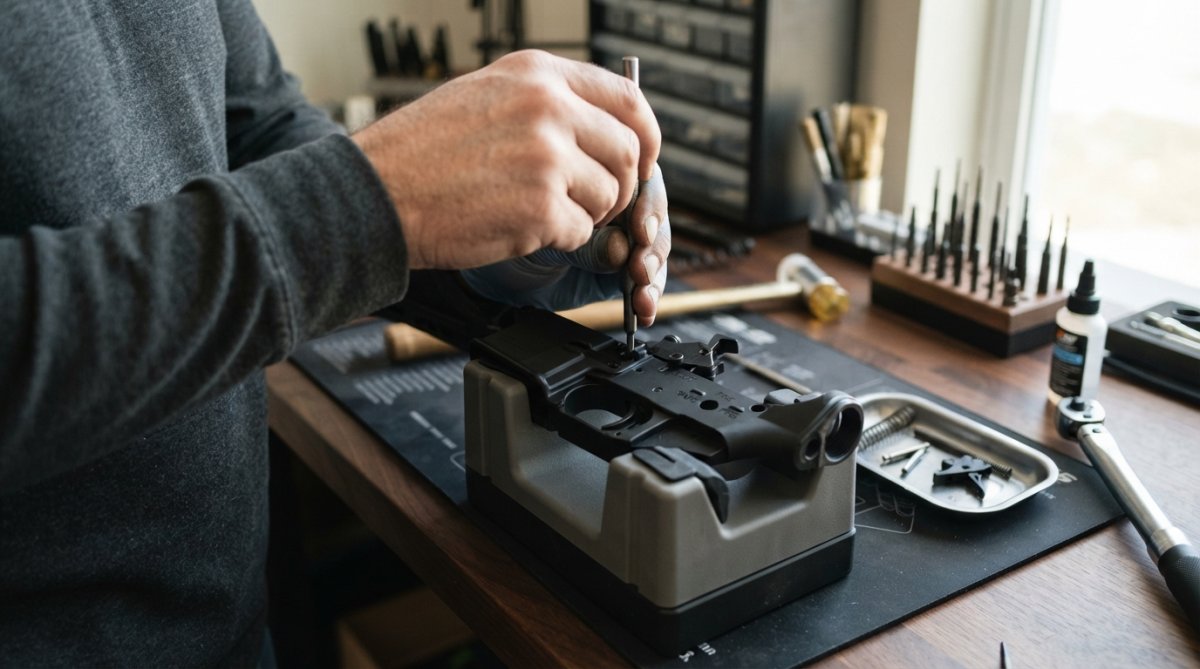
Insert the new trigger assembly, ensuring all components align properly. The trigger should move smoothly without binding. If there’s resistance, stop and check alignment, forcing a misaligned trigger can damage both the trigger and the frame.
Reinstall the trigger pin, making sure it’s fully seated. Cycle the trigger several times to verify smooth operation. Check that the safety mechanism functions correctly, the trigger should not move when the safety is engaged (on platforms with a manual safety).
Reassemble your firearm and function-test it. Dry-fire into a safe direction multiple times. The trigger should break cleanly without creep, and the reset should feel positive and consistent.
Carry vs Competition: Choosing Your Trigger for Real-World Use
This is where the choice becomes personal. A competition trigger and a carry trigger have fundamentally different priorities, and using the wrong one for your application can create problems.
Competition triggers prioritize speed and consistency. They’re engineered for shooters who are making deliberate, controlled shots at known distances with unlimited time to aim. The Timney Alpha Series for Glock is explicitly designed for this use case. It delivers a true single-action feel with a light, clean break and a short reset. These characteristics translate to faster shot splits and tighter groups on the range.
But that same trigger becomes a liability in a carry scenario. A light pull weight increases the risk of unintended discharge during a defensive encounter. Adrenaline, stress, and the chaos of a real situation create conditions where a 2.5-pound trigger pull is dangerous. You might brush the trigger during draw, or your finger might slip during manipulation. A heavier, more deliberate pull, 4.5 to 5.5 pounds, provides a safety margin.
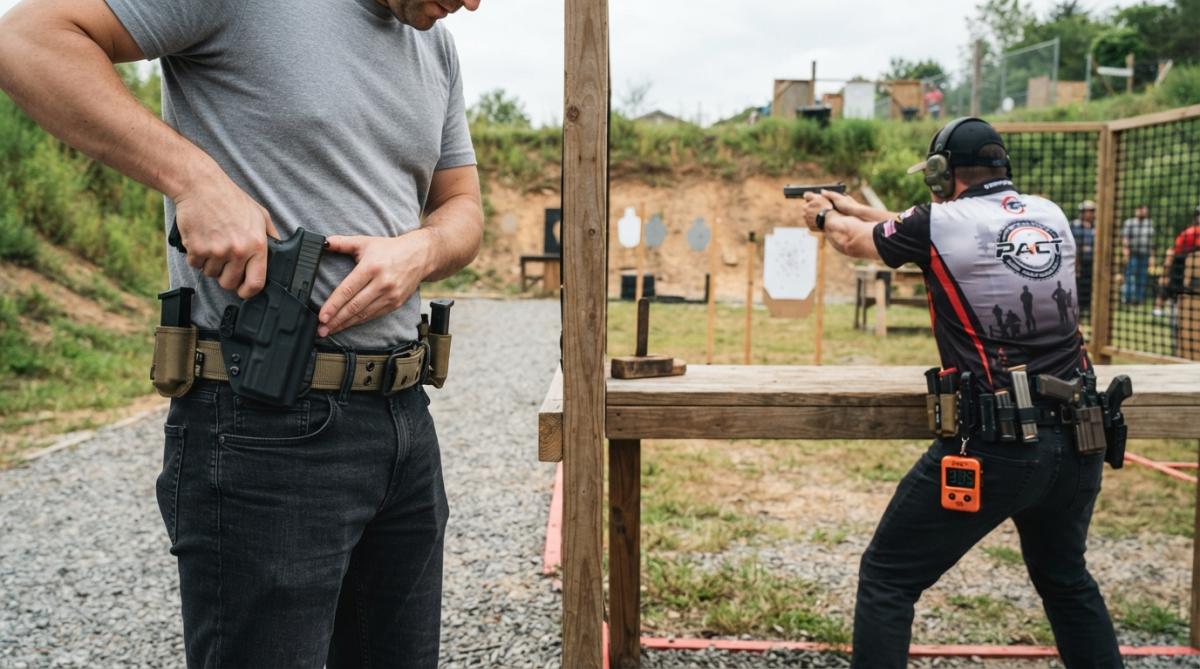
Carry-focused triggers like those in Apex Tactical’s duty lineup and NDZ Performance’s carry-optimized options prioritize safety and reliability. They maintain factory-level pull weights, incorporate strong safety mechanisms, and are engineered for shooters who need to trust their firearm in high-stress, unpredictable situations. The trade-off is that you’re not getting the speed advantage you’d have with a competition trigger.
The solution is context-specific. If you’re a competitive shooter, use a competition trigger for matches and training. If you carry for self-defense, use a carry-appropriate trigger. Some shooters maintain separate firearms for each purpose, which is the cleanest approach. If you’re building a single platform for both purposes, compromise toward the carry side, safety matters more than speed in a real encounter.
Long-Term Wear and Durability: What Holds Up
A trigger is a mechanical device that cycles thousands of times. Over time, components wear. Springs lose tension, sear surfaces develop micro-scratches, and tolerances loosen. Quality matters here more than anywhere else, because a worn trigger can fail in ways that are difficult to diagnose.
NDZ Performance triggers and established custom manufacturers use hardened stainless steel and precision-machined components specifically because these materials resist wear. A quality trigger should maintain consistent pull weight and reset feel for thousands of rounds. Budget triggers sometimes cut corners on material or manufacturing precision, and those shortcuts show up as inconsistency, pull weight that varies shot to shot, reset that feels spongy, or creep that develops over time.
The durability question is also about maintenance. A trigger that’s easy to clean and that doesn’t accumulate debris will last longer. Drop-in triggers have an advantage here because they’re fully self-contained and can be removed for cleaning. Trigger shoes that modify the factory mechanism are harder to service.
Polymer Pew’s focus on anodized aluminum and stainless steel construction directly addresses durability. These materials don’t corrode, they resist wear, and they maintain their mechanical properties over extended use. You’re not just paying for initial performance, you’re paying for performance that persists.
Conclusion
The choice between NDZ Performance and other custom triggers comes down to your use case, platform, and budget. Competition shooters need speed and light breaks; carry shooters need safety and reliability; general shooters often want something in between. Quality matters, a cheap trigger that fails or creates safety issues costs far more than a reliable upgrade.
At Polymer Pew, we’ve built triggers and trigger components that prioritize both performance and durability. Our flat-faced triggers and drop-in kits are engineered for compatibility across variant platforms, backed by anodized aluminum and stainless steel construction that holds up under real-world use. Whether you’re upgrading for speed or security, get your Flatties here and experience the difference a quality trigger makes.
Frequently Asked Questions
Are NDZ Performance custom triggers worth the investment?
NDZ Performance custom triggers deliver measurable improvements in trigger pull weight, reset distance, and creep reduction compared to factory options. For competition shooters and precision builders, the enhanced mechanical consistency and clean break justify the cost. For casual range use, the upgrade is valuable but not essential. Budget-conscious builders should compare total build cost against performance gains for their specific use case.
What's the main difference between a drop-in trigger and a trigger shoe upgrade?
A drop-in trigger replaces the entire trigger assembly, sear, connector, spring, and shoe, with a pre-assembled unit requiring minimal installation. A trigger shoe upgrade replaces only the external shoe while keeping the factory sear and connector. Drop-in triggers offer greater performance gains and consistency but cost more. Trigger shoe upgrades provide ergonomic improvement and modest performance gains at lower cost, making them ideal for budget builds.
Do aftermarket triggers affect the safety of a firearm?
Quality aftermarket triggers maintain or exceed factory safety standards when properly installed. Look for triggers with firing pin safeties, sear engagement verification, and drop-safe design. Poor installation or low-quality components can compromise safety. Always verify frame compatibility, test for binding during dry cycles, and confirm that safety mechanisms engage fully. Reputable manufacturers like Apex Tactical and TriggerTech publish safety specifications exceeding mil-spec requirements.
How do I know if a custom trigger will fit my firearm frame?
Frame compatibility depends on your specific platform, Glock generation, AR-15 receiver type, or clone variant. Verify the trigger's listed compatibility against your exact model. Test fit before final installation by checking that the trigger shoe seats properly, the safety engages smoothly, and the sear engagement feels correct. Polymer Pew's MKE-compatible components are tested across multiple variants, reducing fitment risk on clone builds.
This article was written using GrandRanker