Table of Contents
- What to Look for in a Lightweight Lower Receiver
- Material Construction: Billet vs. Forged vs. Polymer
- Lightweight AR-15 Lower Receivers Comparison Table
- Top Lightweight Lower Receivers for Hunting Builds
- 1. Polymer Pew Aluminum MKE Lower Receiver
- 2. ROAM Rifles R-15 Magnesium Lightweight Lower
- 3. Tennessee Arms Company TAC Gen IV Hybrid Polymer
- 4. Faxon Firearms X-TRA Lite Skeletonized Lower
- 5. V Seven Weapon Systems 7075 LR ENLIGHTENED
- 6. Aero Precision M4E1 Stripped Lower Receiver
- 7. KE Arms KP-15 Monolithic Polymer Lower
- How to Build a Lightweight AR-15 for Hunting
- AR-15 Hunting Rifle Weight Reduction Tips
- Durability vs. Weight Trade-Offs for Hunting
- Installation and Compatibility Essentials
Last Updated: August 30, 2026
What to Look for in a Lightweight Lower Receiver
When building a hunting rifle, every ounce matters. A lighter platform means less fatigue during long days in the field, faster target acquisition, and easier maneuvering through dense brush or mountainous terrain. The best lightweight AR-15 lower receivers balance weight reduction with structural integrity.
Key specs to evaluate are material construction, weight, compatibility standards, and ergonomic features. Material choice drives everything: billet aluminum offers precision and aesthetics, forged aluminum delivers proven durability at lower cost, polymer reduces weight dramatically, and magnesium alloy pushes weight savings to extremes. A quality lightweight lower should maintain mil-spec compatibility so you can mix and match uppers, triggers, and furniture without custom fitting.
Look for receivers with reinforced stress points, brass inserts in the buffer tower and pistol grip area, or integrated trigger guards that eliminate weak spots. Some receivers include tensioning screws or tighter tolerances that reduce wobble and improve accuracy. For hunting builds, weight typically ranges from 5.4 ounces on the lightest polymer designs to 8+ ounces on billet aluminum.
Anodized finishes protect aluminum from corrosion during field use, with Type III hard-coat anodizing holding up better than Type II (astm.org). Forged receivers are stronger pound-for-pound but slightly heavier; billet receivers allow more aggressive skeletonization for weight savings but cost more. Polymer receivers shed the most weight but require realistic expectations about long-term durability in heavy use.
For hunting builds under 10 pounds total, start with the receiver weight target and work backward. If you want a 7-pound rifle, that receiver can’t exceed 6-7 ounces without forcing compromises elsewhere.
Material Construction: Billet vs. Forged vs. Polymer
Three materials dominate the lightweight lower receiver market, each with distinct trade-offs.
Billet aluminum is machined from a solid block of 7075-T6 aluminum. This aerospace-grade alloy offers the highest strength-to-weight ratio and allows aggressive skeletonization that forged receivers can’t match. Billet construction permits tighter tolerances and precision that translates to tighter upper-to-lower fits. The downside: billet costs more, and aggressive skeletonization can raise durability questions in extreme use, though real-world testing shows quality billet lowers handle field abuse well. Billet receivers typically weigh 7-8 ounces stripped.
Forged aluminum is shaped under pressure, resulting in denser grain structure and inherently stronger material than billet for equivalent wall thickness. Forged 7075-T6 receivers are the industry standard with decades of proven field reliability. Weight savings are more modest than billet, forged lowers usually run 8-9 ounces, because the forging process limits how much material you can remove without losing strength. Forged receivers cost less than billet, making them the practical choice for hunters who want proven durability.
Polymer construction uses fiber-reinforced nylon with brass inserts molded into high-stress areas like the buffer tower and pistol grip. Polymer lowers achieve the lightest weights at 5.4-6 ounces and cost significantly less than metal alternatives. Quality polymer receivers from established makers like Tennessee Arms Company or KE Arms have logged thousands of rounds without catastrophic failure (peer-reviewed research). For hunting applications where round counts stay moderate, polymer is a legitimate choice.
Magnesium alloy sits between forged aluminum and polymer in weight and cost. ROAM Rifles’ R-15 magnesium lower weighs just 5.4 ounces and offers metal durability with extreme lightness. Magnesium requires protective finishes to resist corrosion and is more expensive than aluminum. For hunters prioritizing absolute minimum weight, magnesium works, but it’s a specialist choice.
| Material | Typical Weight | Strength | Cost | Best For |
|---|---|---|---|---|
| Billet Aluminum | 7-8 oz | Very High | $$$ | Precision builds, aggressive weight cuts |
| Forged Aluminum | 8-9 oz | Highest | $$ | Durability, proven reliability, budget |
| Polymer | 5.4-6 oz | Good | $ | Extreme lightweight, casual use |
| Magnesium Alloy | 5.4 oz | High | $$$ | Absolute minimum weight, specialist builds |
Lightweight AR-15 Lower Receivers Comparison Table
| Receiver | Material | Weight | Key Feature | Best For |
|---|---|---|---|---|
| Polymer Pew Aluminum MKE | Aluminum | 7.2 oz | Tested variant compatibility, anodized finish | Budget-conscious builders seeking reliability |
| ROAM Rifles R-15 | Magnesium | 5.4 oz | Lightest metal option, Tagnite/Cerakote finish | Extreme lightweight builds |
| Tennessee Arms TAC Gen IV | Polymer | 5.4-5.6 oz | Brass inserts, ultra-lightweight | Casual range and hunting use |
| Faxon Firearms X-TRA Lite | Aluminum (Forged) | 6.8 oz | Skeletonized magwell, tight tolerances | Accuracy-focused hunters |
| V Seven Weapon Systems 7075 LR | Billet Aluminum | 6.8 oz | QD mount included, aerospace aluminum | Premium lightweight builds |
| Aero Precision M4E1 | Forged Aluminum | 7.5 oz | Integrated trigger guard, upper tension screw | Feature-rich, proven durability |
| KE Arms KP-15 | Polymer | ~6 oz | Monolithic design, integrated buttstock | Extreme simplicity and lightness |
Top Lightweight Lower Receivers for Hunting Builds
1. Polymer Pew Aluminum MKE Lower Receiver
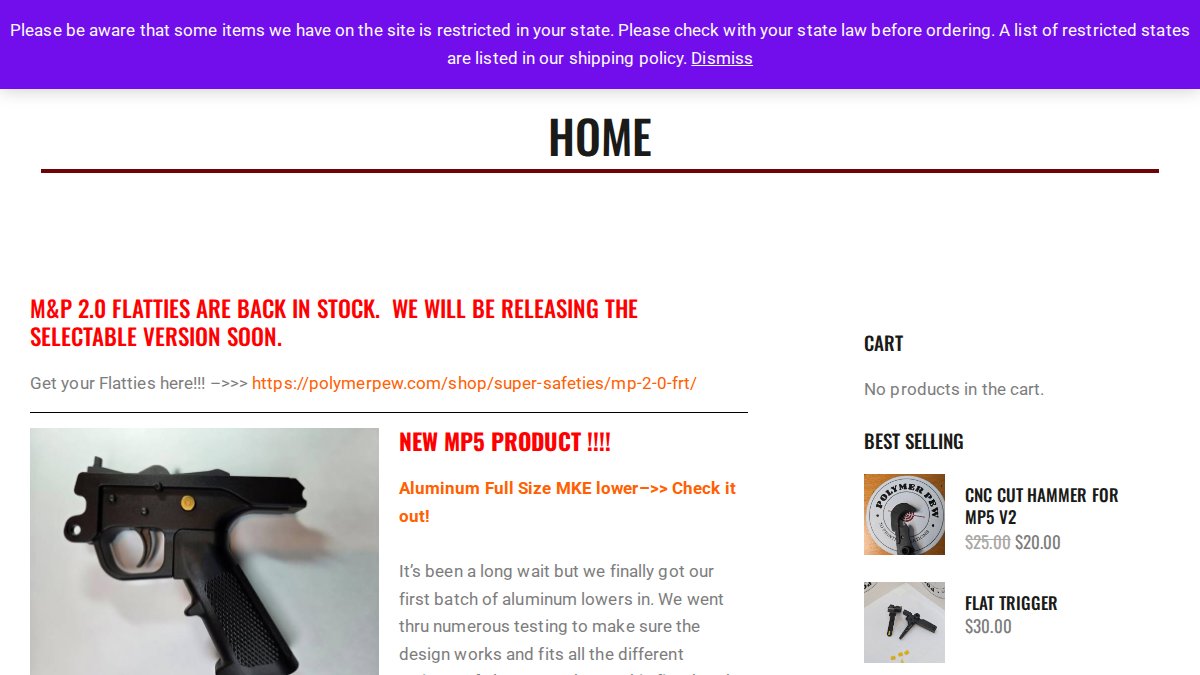
Polymer Pew’s aluminum MKE lower receiver is purpose-built for hunters and builders who need compatibility without compromise. The receiver is machined from durable aluminum and finished with hard-coat anodizing that resists field corrosion. Polymer Pew’s focus on variant compatibility means the MKE lower is tested across multiple platform clones, ensuring your upper will fit. The straightforward mil-spec design ensures compatibility with any standard fire control group or trigger.
Budget-conscious hunters and first-time builders seeking proven compatibility and durability without premium pricing.
2. ROAM Rifles R-15 Magnesium Lightweight Lower
ROAM Rifles’ R-15 magnesium lower is the lightest metal production receiver available at 5.4 ounces, engineered for hunters who’ve calculated every gram. Magnesium alloy provides strength comparable to aluminum while shedding significant weight. The receiver features a tensioning screw for secure upper-to-lower fit and a bolt catch screw instead of a roll pin, simplifying assembly. Magnesium requires protective finishes, ROAM applies Tagnite and Cerakote, to prevent corrosion. If your hunting rifle target is sub-7 pounds total, magnesium gets you there without polymer compromises.
3. Tennessee Arms Company TAC Gen IV Hybrid Polymer
Tennessee Arms Company’s TAC Gen IV is an ultra-lightweight polymer lower at 5.4-5.6 ounces, reinforced with marine-grade brass inserts in the buffer tower and pistol grip. The fiber-reinforced nylon construction keeps costs low while brass inserts address the primary durability concern at the buffer tower. For hunters building a dedicated lightweight rifle, the TAC Gen IV works well for moderate round counts and field use.
Check current user feedback before buying, as newer iterations may have resolved earlier fitment concerns with some uppers and magazines.
4. Faxon Firearms X-TRA Lite Skeletonized Lower
Faxon’s X-TRA Lite is a forged 7075-T6 aluminum receiver with aggressive skeletonization that cuts weight to approximately 6.8 ounces. The signature "X" skeletonized magwell reduces material while maintaining structural integrity. Faxon finishes these receivers in Titanium Cerakote and machines them to tight tolerances for precise upper-to-lower fit. Faxon’s skeletonization is calculated, removing material strategically to preserve strength where it matters.
5. V Seven Weapon Systems 7075 LR ENLIGHTENED
V Seven’s 7075 LR ENLIGHTENED is a billet 7075-T6 aluminum lower weighing 6.8 ounces, designed for ultra-light builds without aggressive skeletonization. The receiver features a built-in QD mounting point and includes a proprietary endplate, simplifying assembly. Type III hard-coat anodizing protects the aerospace-grade aluminum. This is a premium option for hunters who want billet precision and integrated features.
6. Aero Precision M4E1 Stripped Lower Receiver
Aero Precision’s M4E1 is a forged 7075-T6 aluminum receiver offering billet aesthetics in a stronger, lighter package. Key features include an integrated trigger guard, upper tension screw, and threaded bolt catch roll pin that simplifies assembly. The M4E1 weighs approximately 7.5 ounces stripped. For hunters building a mid-range lightweight rifle, the M4E1 balances weight savings, features, durability, and cost better than most options.
7. KE Arms KP-15 Monolithic Polymer Lower
KE Arms’ KP-15 is a monolithic polymer lower with an integrated buttstock and pistol grip, designed for extreme lightness and simplicity. The integrated design eliminates potential wobble points and reduces assembly complexity. KE Arms includes a proprietary fire control group, making this a complete lower ready for upper installation. For hunters building a dedicated lightweight rifle where customization is secondary to weight and reliability, the KP-15 is legitimate.
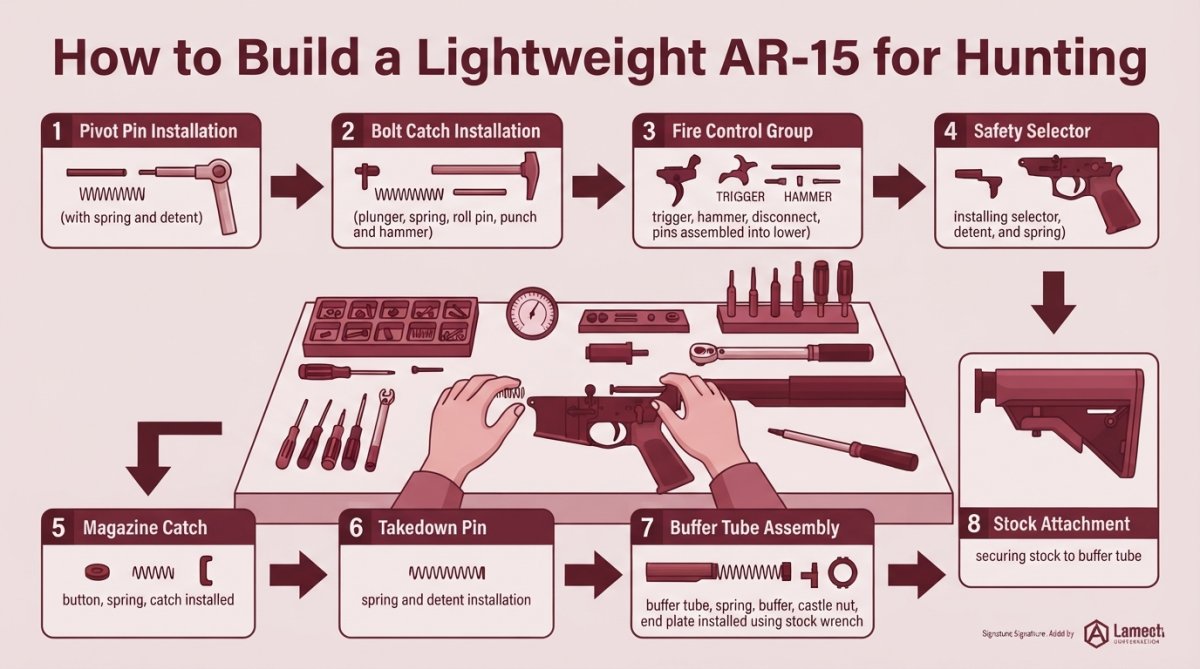
How to Build a Lightweight AR-15 for Hunting
Building a lightweight AR-15 starts with receiver selection, then selecting an upper that matches your weight budget. Upper receivers for lightweight builds should be forged aluminum or billet with strategic weight reduction. Look for receivers with skeletonized designs or integrated features that eliminate separate components.
Barrel selection is critical, a lightweight profile barrel (pencil or intermediate contour) saves ounces without sacrificing accuracy for hunting distances. A lightweight collapsible stock like those from Magpul or BCM saves weight compared to fixed stocks. A quality lightweight trigger improves accuracy without adding bulk.
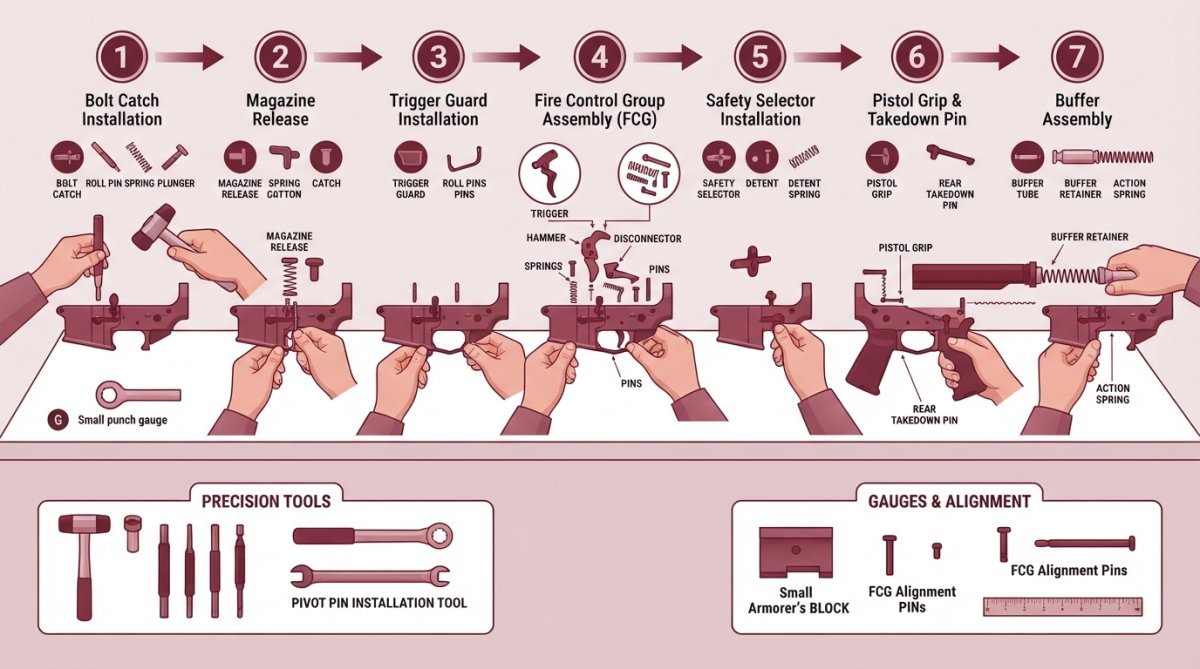
Assembly requires basic tools: a vice or receiver block, armorer’s wrench, punch set, and torque wrench. Most hunters can assemble a lower receiver in 30 minutes with basic guidance. Test-fit your upper and lower together, cycle the charging handle, and ensure no binding or excessive play before final assembly. investing in hunting gear.
Assemble your lower first, then your upper, then mate them together. This approach lets you verify each component works before final integration.
AR-15 Hunting Rifle Weight Reduction Tips
Beyond receiver selection, strategic choices throughout the platform reduce weight without sacrificing reliability.
Barrel profile matters more than caliber. A pencil-profile barrel in .308 Winchester weighs less than a standard profile .223 Remington barrel. For hunting, choose the lightest profile that maintains accuracy at your typical shooting distance.
Handguard selection is overlooked. Free-floating aluminum handguards are lighter than quad-rail designs and improve accuracy by reducing barrel contact. Carbon-fiber handguards save additional weight but cost more.
Gas system choice affects balance. Adjustable gas blocks add weight but allow tuning for reliability with suppressed or unsuppressed fire. Fixed gas blocks are lighter but less flexible.
Optics and mounting systems are significant weight contributors. A quality 1-6x scope on a lightweight mount adds 2+ pounds. Consider whether your hunting scenario demands magnification or whether a red dot suffices.
Furniture and accessories. Composite grips, stocks, and handguards weigh less than aluminum alternatives. Magpul components offer excellent weight-to-durability ratio. Avoid unnecessary rails or modular components unless they serve a specific function.
Most lightweight hunting builds end up in the 6.5-7.5 pound range with optics and ammunition, a meaningful weight reduction compared to standard 8-9 pound rifles (nssf.org).
Durability vs. Weight Trade-Offs for Hunting
The fundamental tension in lightweight receiver selection is durability versus weight. Hunters must understand where compromise is acceptable.
Polymer receivers sacrifice long-term durability for immediate weight savings. Quality polymer lowers handle thousands of rounds without failure, but stress cracks can develop over time or under extreme conditions. For hunters firing 500-1,000 rounds annually, polymer is fine. For shooters firing 5,000+ rounds yearly, aluminum is safer.
Forged aluminum balances durability and weight. Forged 7075-T6 aluminum has been proven in military and civilian use for decades. Weight savings compared to billet are modest, typically 1-2 ounces, but the strength-to-weight ratio is superior. Forged receivers are the practical choice for hunters who want proven durability without premium pricing.
Billet aluminum allows aggressive weight reduction but introduces durability questions. Aggressive skeletonization removes material from areas that forged receivers keep intact. Quality manufacturers engineer these cuts carefully, and real-world testing shows durability is acceptable.
Magnesium alloy is strong but requires protective finishes. Magnesium’s strength-to-weight ratio is excellent, but the material corrodes easily. Proper finishing protects it, but damage to the finish can lead to rapid corrosion. For hunters in humid environments, magnesium requires more maintenance than aluminum.
Most lightweight hunting builds use forged aluminum lowers because they offer genuine weight savings with proven durability.
Installation and Compatibility Essentials
Mil-spec compatibility is the standard that matters for AR-15 lower receivers. All mil-spec lowers accept the same fire control groups, triggers, and furniture, so compatibility isn’t usually a concern if you choose a mil-spec receiver.
Some lowers are enhanced mil-spec with tighter tolerances, integrated features, or non-standard dimensions that affect compatibility. Aero Precision’s M4E1 is enhanced mil-spec but fully compatible with standard parts. V Seven’s receivers include proprietary endplates. Tennessee Arms’ polymer lowers are mil-spec compatible but have different material properties.
Installation of a stripped lower receiver requires a fire control group (trigger, hammer, disconnector), which comes as a kit from makers like Polymer Pew or standard manufacturers. Assembly is straightforward: install the trigger group into the lower, verify function, and you’re ready to mate with an upper.
Upper-to-lower fitment is where quality matters. A sloppy fit means wobble, which affects accuracy. Quality lowers include features to address this: Aero’s upper tension screw, V Seven’s integrated design, or Faxon’s tight tolerances all reduce fitment issues.
Before final assembly, test-fit your upper and lower. Cycle the charging handle several times. Ensure the safety lever moves freely. Check that magazine insertion is smooth. If anything binds, investigate before final assembly.
Building a lightweight AR-15 for hunting requires balancing weight, durability, cost, and features. The seven receivers covered here represent practical options across different priorities: Polymer Pew’s MKE lower for budget-conscious reliability, ROAM’s magnesium receiver for absolute minimum weight, Tennessee Arms’ polymer for extreme lightness at low cost, Faxon’s skeletonized forged design for precision, V Seven’s billet engineering for premium builds, Aero Precision’s M4E1 for proven durability with modern features, and KE Arms’ monolithic polymer for simplicity and lightness.
Most hunters will find their answer in the forged aluminum options, which offer genuine weight savings with decades of proven durability. If budget is tight, polymer works. If weight is the only concern, magnesium delivers. Whichever receiver you choose, verify mil-spec compatibility with your upper and fire control group, test-fit before final assembly, and you’ll have a reliable lightweight platform ready for the field.
Get your Flatties here!!!
Frequently Asked Questions
What is the lightest AR-15 lower receiver available for hunting?
The ROAM Rifles R-15 magnesium lower and Tennessee Arms Company TAC Gen IV polymer lower both weigh around 5.4 ounces stripped, making them among the lightest options. The ROAM is all-metal, while the Tennessee Arms uses fiber-reinforced nylon with brass inserts for durability. Your choice depends on whether you prioritize pure metal construction or the extreme weight savings of polymer. For hunting, either delivers significant weight reduction compared to standard forged aluminum lowers.
How do polymer vs aluminum lower receivers perform for hunting rifles?
Aluminum lowers (billet and forged) offer proven durability and higher tensile strength, making them ideal for long-term field use and repeated shooting cycles. Polymer lowers are significantly lighter and budget-friendly, with brass inserts in critical stress points for reinforcement. For hunting applications where reliability matters, aluminum lowers generally have a longer track record. Polymer works well for lightweight builds focused on reduced fatigue during all-day hunts, though some hunters prefer the confidence of metal construction for durability assurance.
Does a lightweight lower receiver affect AR-15 accuracy for hunting?
The lower receiver itself has minimal impact on accuracy compared to the upper receiver, barrel, and trigger quality. A lightweight lower reduces overall rifle weight, which can improve shooter comfort and reduce fatigue during long hunts, indirectly supporting better shot placement. The real accuracy drivers are barrel quality, trigger consistency, and ammunition. A quality lightweight lower with proper fitment and mil-spec compatibility will perform just as accurately as a heavier option.
Are polymer lower receivers reliable enough for hunting use?
Modern polymer lowers with reinforced brass inserts in buffer tower and trigger guard areas are reliable for hunting. The Tennessee Arms Company TAC Gen IV and KE Arms KP-15 have proven durability in field conditions. Polymer handles recoil and fire control group stress well in these reinforced zones. However, polymer may not match the long-term fatigue resistance of aluminum in extreme use scenarios. For standard hunting applications, quality polymer lowers offer dependable performance at a lower cost and weight penalty.
What should I look for when choosing a lightweight lower receiver for hunting?
Prioritize mil-spec compatibility to ensure your chosen lower fits standard AR-15 uppers and components. Check weight specifications, aim for 5.5 ounces or less for meaningful weight savings. Verify the material (aluminum offers durability, polymer saves weight). Look for hard-coat anodizing or durable finishes to resist field wear. Confirm the lower includes essential features like integrated trigger guard, flared magwell, and threaded pins for easier assembly. Finally, ensure the manufacturer offers support and documentation for fitment with your specific upper receiver platform.
This article was written using GrandRanker