Table of Contents
- Aluminum vs Polymer Lower Receivers: Material Breakdown
- Weight Comparison and Portability
- Durability and Structural Integrity
- Cost-Effectiveness and Budget Builds
- How to Install MKE Lower Receiver
- Compatibility and Long-Term Reliability
- Which Material Should You Choose?
Last Updated: August 22, 2026
Aluminum vs Polymer Lower Receivers: Material Breakdown
When you’re building a custom rifle, the lower receiver is your foundation. It’s the serialized part, the legal firearm, and the component that determines everything about how your build will feel, perform, and hold up over time. The choice between aluminum and polymer fundamentally changes your build’s character.
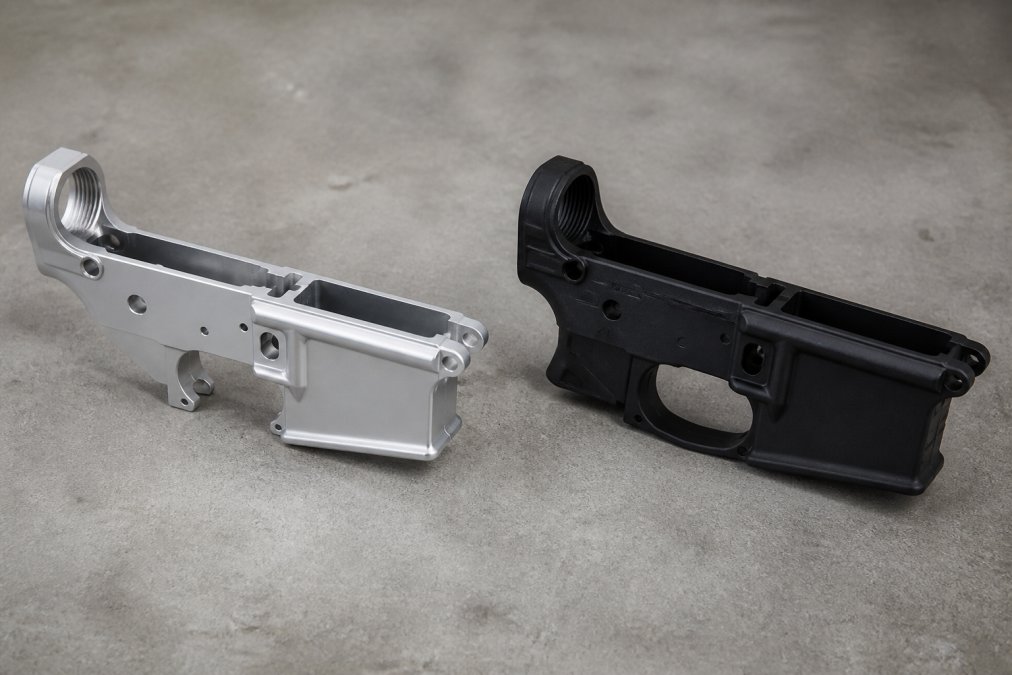
Aluminum lower receivers dominate the market because they offer proven durability, superior rigidity, and the reassuring weight of metal. Polymer receivers have gained serious traction in recent years because they’re lighter, often cheaper, and modern materials have closed the durability gap significantly. But they’re not interchangeable choices, each material makes different trade-offs that matter depending on your use case.
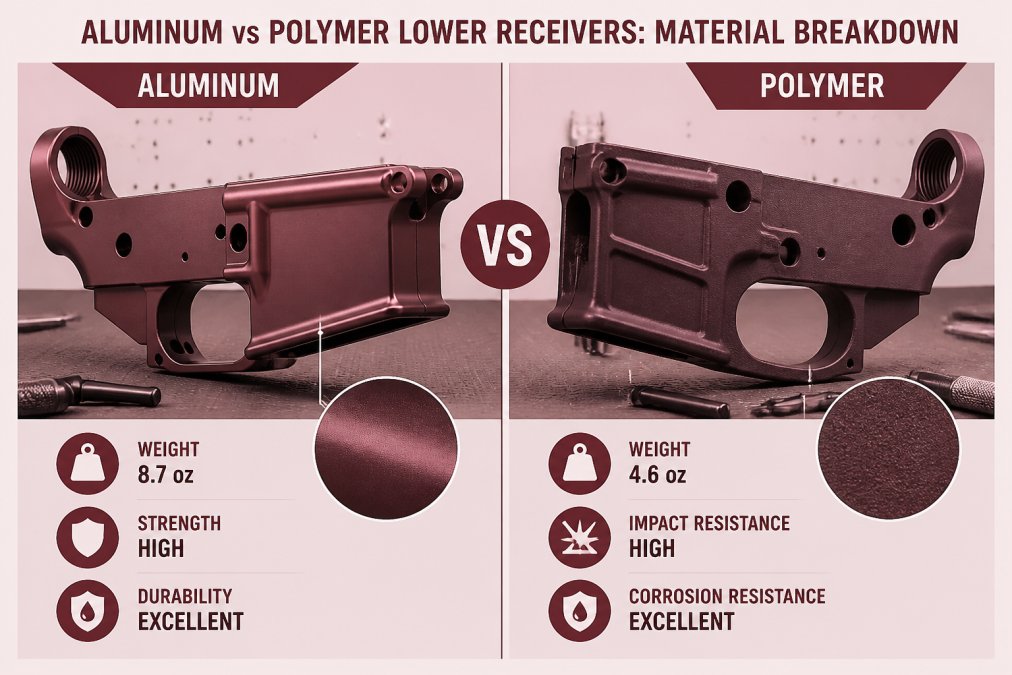
The real question isn’t which material is objectively better. It’s which one aligns with what you actually need from your rifle. Aluminum excels in durability, heat dissipation, and that solid feel that many shooters prefer. Polymer wins on weight savings, cost efficiency, and assembly simplicity. Understanding the technical differences, tensile strength, impact resistance, thermal expansion, and stress fracture patterns, is what lets you make that decision confidently.
At Polymer Pew, we’ve tested both extensively. Our aluminum MKE lower receivers are CNC-machined from high-grade alloy and anodized for long-term reliability. We also understand why builders choose polymer, and we stock quality options for shooters who prioritize weight and budget. The goal here is to give you the specifics so you can build what works for you.
Weight Comparison and Portability
Polymer lower receivers are significantly lighter than their aluminum counterparts. A typical aluminum 7075-T6 lower receiver weighs between 6.5 and 7.5 ounces stripped. A fiber-reinforced polymer lower like the Tennessee Arms TNARMS-15 comes in at around 5.4 ounces, roughly 1 to 2 ounces lighter depending on the aluminum model.
That difference scales across your entire build. If you’re assembling a rifle with a polymer lower, buffer tube, stock, and grip all integrated into one monolithic unit (like the KE Arms KP-15), you’re looking at weight savings of 4 to 6 ounces compared to a comparable aluminum setup. For a patrol rifle or competition gun where you’re carrying it all day, that adds up.
The weight advantage of polymer matters most in specific scenarios. Competition shooters doing long stages appreciate the reduced fatigue. Hunters covering distance benefit from the lighter carry. Tactical operators prioritizing mobility gain a real advantage. But for a range gun or a rifle that stays mounted most of the time, the weight difference is academic.
Aluminum’s heft is actually a feature in some contexts. The added mass naturally dampens recoil impulse slightly, which some shooters prefer for faster follow-up shots. It also contributes to the overall balance and feel of a heavier, more substantial rifle, something many builders value aesthetically and functionally.
Portability also depends on your complete setup. A lightweight polymer lower loses its advantage if you pair it with a heavy barrel, scope, and ammunition. But if you’re building a dedicated lightweight rifle, short barrel, minimal accessories, ultralight optics, polymer’s weight savings become genuinely useful rather than marginal.
Durability and Structural Integrity
This is where the materials diverge most significantly. Aluminum lower receivers, especially those machined from 7075-T6 or 6061-T6 forgings, offer exceptional tensile strength and impact resistance. The material is inherently rigid, resists deformation under recoil stress, and handles thermal expansion consistently across temperature ranges.
CNC-machined aluminum components like Aero Precision’s M4E1 or Anderson Manufacturing’s AM-15 are engineered to mil-spec tolerances. They handle thousands of rounds without degradation. The anodized finish provides corrosion resistance and surface hardness. These receivers are built to outlast multiple generations of shooters.
Polymer receivers have evolved significantly. Modern injection-molded designs use 30% glass-filled nylon (KE Arms) or fiber-reinforced nylon with brass inserts at stress points (Tennessee Arms) (peer-reviewed research). These materials handle recoil forces effectively and resist stress fractures under normal use. The brass inserts in critical areas, buffer tower, pivot pin holes, hammer pin area, reinforce the exact points where polymer is most vulnerable to material fatigue.
The durability difference emerges in extreme conditions. Aluminum maintains structural rigidity across temperature swings (asm.org). Polymer experiences thermal expansion at higher rates, which can affect fit and tolerance over time in extreme heat or cold (nist.gov). Aluminum also handles sustained rapid fire better, the material doesn’t experience the cumulative stress fatigue that polymer can develop after thousands of consecutive rounds.
For typical shooting, hunting, sport, training, both materials will outlast your interest in the rifle. Polymer’s lifetime warranty (Tennessee Arms offers this) reflects confidence in the material. But if you’re building a rifle for duty use, competition where you’re running thousands of rounds annually, or extreme-environment deployment, aluminum’s superior structural rigidity and thermal stability give it a real edge.
Polymer’s flexibility is sometimes presented as a weakness, but it’s actually a design feature. The slight give in polymer absorbs shock differently than rigid aluminum, which can reduce transmitted vibration. This doesn’t make it more durable, just differently durable. It’s a trade-off, not a deficiency.
Cost-Effectiveness and Budget Builds
This is polymer’s strongest argument. A stripped aluminum lower from Anderson Manufacturing can be found for around $44.99 to $49.99. Aero Precision’s M4E1 stripped lower receiver can be found for around $289.99. Both are quality components, but the entry price for aluminum is immediately higher.
Polymer stripped lowers start around $40 to $55 for quality options like Tennessee Arms. Complete polymer lowers with integrated stocks and fire control groups (like the KE Arms KP-15) can be found for around $159.95 to $479.00. For a builder on a tight budget, polymer’s cost advantage is real and immediate.
But cost-effectiveness isn’t just about the initial purchase price. It’s about total value delivered. An aluminum lower you buy for $50 will likely outlast three polymer builds. If you’re planning a long-term rifle that you’ll maintain and upgrade over years, the aluminum’s durability justifies its higher upfront cost.
For budget builds, your first AR-15, a beater rifle for training, a platform to learn on before investing in premium components, polymer makes financial sense. You get a functional, reliable rifle at lower cost. As your skills and budget grow, you can always rebuild with aluminum components later.
The real cost-effectiveness analysis depends on your timeline and usage. A one-time builder buying a single rifle should consider total cost of ownership. A hobbyist who builds multiple platforms annually might find polymer’s lower per-build cost more attractive, even if each individual rifle has a shorter lifespan.
Polymer Pew’s approach addresses both markets. Our aluminum MKE lower receivers offer the durability and mil-spec compatibility that serious builders demand. Our budget-friendly drop-in kits and polymer options serve builders who prioritize cost efficiency without sacrificing reliability.
How to Install MKE Lower Receiver
Installing an MKE lower receiver is straightforward if you understand the basic assembly sequence. The process takes roughly 30 to 45 minutes for someone with basic firearm assembly experience, longer if you’re doing it for the first time.
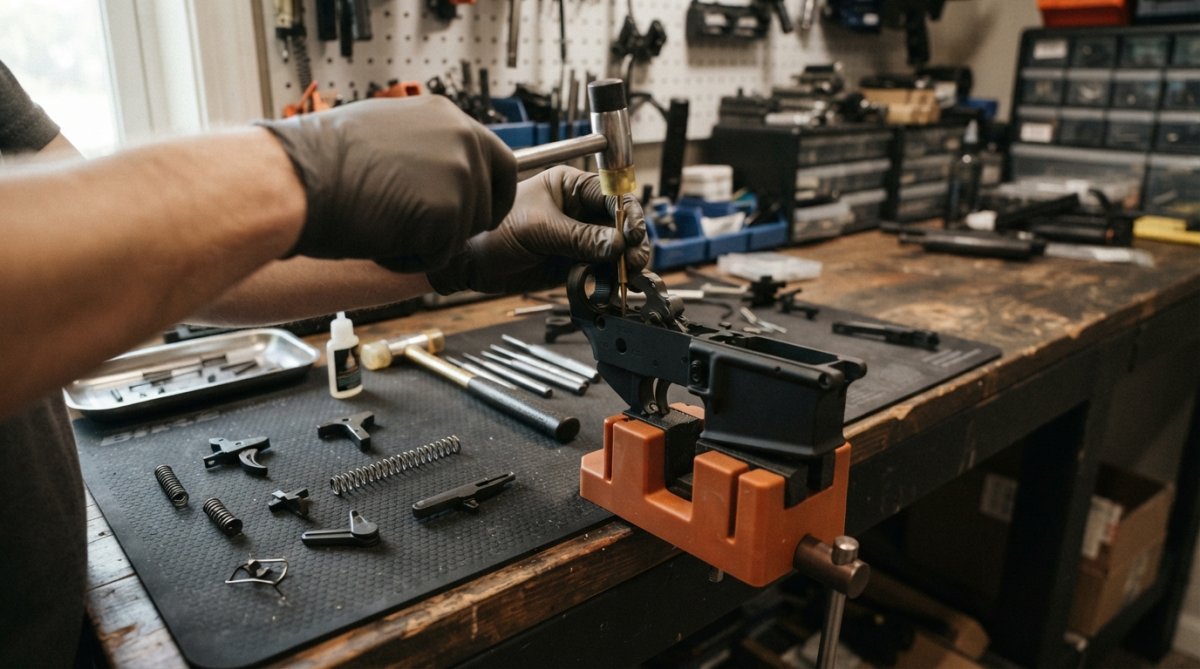
Start by ensuring your lower receiver is properly oriented with the magazine well facing down. Insert the trigger guard first if it’s not already installed. The pivot pin hole should align with your upper receiver when fully assembled.
Next, install the fire control group. This is where precision matters. The hammer pin and trigger pin must align perfectly with their holes. If you’re using Polymer Pew’s super safety kit or flat triggers, follow the specific installation sequence for that component. The hammer should move freely without binding, and the trigger should break cleanly without creep or excessive slack.
Install the safety selector, ensuring it moves smoothly between fire and safe positions. Check that the selector doesn’t bind against the receiver or fire control group. This is a common issue with tight tolerances, if binding occurs, you may need to carefully file the selector lever or the receiver pocket.
The buffer tube assembly comes next. Thread it clockwise into the receiver extension hole. Hand-tighten it first, then use a receiver extension tool to achieve proper torque. Over-tightening can crack the receiver; under-tightening creates wobble. The tube should be snug with no movement when you apply side pressure.
Install your stock onto the buffer tube. Most mil-spec stocks slide on and lock with a detent. Ensure it’s fully seated and secure. Test the stock for any rocking or lateral movement.
Finally, install the grip. Most AR-15 grips use a single screw through the grip into a threaded hole in the lower receiver. Tighten firmly but not excessively, you can strip the threads if you over-torque.
After assembly, function-check everything before firing. Ensure the safety moves smoothly, the trigger breaks cleanly, the hammer falls reliably, and the stock doesn’t move. If anything binds or feels wrong, disassemble and investigate before shooting.
Polymer Pew’s MKE lowers are tested for variant compatibility across multiple platform clones. If you’re building a specific platform (SCAR-L clone, MCX variant, etc.), verify that your specific lower is compatible before assembly. Our documentation includes compatibility charts for common clone builds.
Compatibility and Long-Term Reliability
Compatibility is where aluminum’s mil-spec standardization shines. CNC-machined aluminum lowers from quality manufacturers (Aero Precision, Anderson, Polymer Pew) maintain tight tolerances that ensure drop-in compatibility with standard fire control groups, buffer tubes, and stocks. You can swap components between builds without fitment issues.
Polymer lowers introduce compatibility variables. The material can shift slightly during molding, affecting tolerance stack-up. This doesn’t make polymer incompatible, it means you need to verify compatibility before assembly. Polymer Pew’s aluminum MKE lowers eliminate this concern entirely. They’re tested across multiple clone variants to ensure that your fire control group, buffer tube, and stock will fit without modification.
Long-term reliability under stress depends on how you use the rifle. Aluminum maintains its properties indefinitely. A well-maintained aluminum lower will function identically after 10,000 rounds or 100,000 rounds. Polymer experiences cumulative stress fatigue, especially at critical stress points like the hammer pin and pivot pin holes. Modern reinforced polymers with brass inserts handle this much better than early generations, but the material does fatigue over extended use.
Thermal stability matters for reliability. Aluminum expands and contracts predictably across temperature ranges. Polymer’s thermal expansion rate is higher, which can affect tolerances in extreme heat or cold. If you’re shooting in harsh environments, desert heat, arctic cold, aluminum’s thermal stability is a genuine reliability advantage.
Maintenance and repairability favor aluminum. If your aluminum lower develops a crack or damage, it can be welded or machined back to specification. Polymer damage is typically permanent. A cracked polymer lower is usually a complete loss. This is why aluminum makes sense for long-term builds you plan to maintain and upgrade.
For most shooters in normal conditions, both materials deliver reliable performance for years. The difference emerges only in extreme use cases: high round counts, harsh environments, or extended ownership timelines. If you’re building a rifle you plan to keep and shoot regularly for a decade, aluminum’s long-term reliability advantage justifies its higher cost.
Which Material Should You Choose?
Choose aluminum if you’re building a rifle you plan to keep long-term, you shoot in extreme environments, or you prioritize durability and thermal stability. Aluminum’s superior structural rigidity, heat dissipation, and proven longevity make it the best choice for serious shooters who value reliability over initial cost.
Choose polymer if you’re budget-conscious, prioritize weight savings, or you’re building a rifle you might rebuild or modify frequently. Polymer’s lower cost and lighter weight make sense for training rifles, competition builds where portability matters, or first-time builders learning the platform.
The choice also depends on your specific platform. If you’re building an MKE or other clone variant, verify that your lower receiver is tested for compatibility before committing. Polymer Pew’s aluminum MKE lowers are engineered for clone compatibility, eliminating guesswork. Our aluminum receivers deliver the durability and precision that serious builders expect, with tested compatibility across multiple variants.
If cost is your primary constraint, polymer is defensible. Modern fiber-reinforced polymer with brass inserts handles normal shooting effectively. Tennessee Arms’ lifetime warranty reflects genuine confidence in the material. But understand the trade-off: you’re gaining affordability and weight savings at the cost of long-term durability and thermal stability.
For most serious builders, anyone building a rifle they’ll own for years, shoot frequently, or maintain through multiple upgrades, aluminum is the better choice. The higher upfront cost is offset by superior reliability, easier maintenance, and longer effective lifespan.
The most honest answer: if you’re uncertain, choose aluminum. It’s the more forgiving material. It will outlast your interest in the rifle, maintain its tolerances indefinitely, and never leave you wondering whether you made the right call. Polymer is a legitimate choice for specific use cases, but aluminum is the default that works for everyone.
Building a reliable rifle starts with the right foundation. Polymer Pew’s aluminum MKE lower receivers deliver mil-spec precision and tested compatibility across clone variants, giving you the durability and performance that serious builds demand. Whether you’re assembling your first rifle or upgrading an existing platform, our anodized aluminum lowers and precision-engineered components ensure that your build will function reliably for years to come. Explore our tested lower receivers and specialized kits, built for builders who demand performance without compromise.
=== FAQ ANSWERS (audit these too, same rules) ===
[1] Q: What is the best material for an AR-15 lower receiver?
A: The best material depends on your priorities. Aluminum offers superior durability, structural rigidity, and heat tolerance, making it ideal for high-round-count shooting and long-term reliability. Polymer receivers are lighter, more affordable, and sufficient for recreational or competition use. Aluminum, particularly 7075-T6 alloy, is the industry standard for demanding applications due to its tensile strength and impact resistance.
[2] Q: Are polymer lower receivers durable enough for long-term use?
A: Polymer receivers with reinforced stress points, like marine-grade brass inserts, are durable for most shooters. However, they’re susceptible to thermal expansion in extreme environments and may develop stress fractures under sustained heavy use. For long-term reliability under demanding conditions, aluminum outperforms polymer. Polymer works well for recreational builds with moderate round counts, but aluminum is a strong choice for competition or frequent shooting.
[3] Q: How do I know if a polymer lower receiver will fit my build without modifications?
A: Check mil-spec compatibility first. Most quality polymer receivers are designed to accept standard fire control groups and components. Before purchasing, verify that the receiver matches your platform’s specifications, AR-15, AR-10, or clone variants. Polymer Pew’s MKE lowers are tested for variant compatibility, and reputable manufacturers provide documentation confirming fit. Always confirm with the seller before buying to avoid binding issues or fitment problems.
[4] Q: What’s the weight difference between aluminum and polymer lower receivers?
A: Polymer receivers are significantly lighter, typically 5-7 ounces stripped, compared to 6.5-7.5 ounces for aluminum. This weight reduction matters for competition shooters and those building lightweight systems. However, the difference is minimal across an entire rifle build. If weight is your primary concern, polymer saves a few ounces per lower, but aluminum’s durability advantages often outweigh the weight penalty for most shooters.
Frequently Asked Questions
What is the best material for an AR-15 lower receiver?
The best material depends on your priorities. Aluminum offers superior durability, structural rigidity, and heat tolerance, making it ideal for high-round-count shooting and long-term reliability. Polymer receivers are lighter, more affordable, and sufficient for recreational or competition use. Aluminum, particularly 7075-T6 alloy, is the industry standard for demanding applications due to its tensile strength and impact resistance.
Are polymer lower receivers durable enough for long-term use?
Polymer receivers with reinforced stress points, like marine-grade brass inserts, are durable for most shooters. However, they're susceptible to thermal expansion in extreme environments and may develop stress fractures under sustained heavy use. For long-term reliability under demanding conditions, aluminum outperforms polymer. Polymer works well for recreational builds with moderate round counts, but aluminum is a strong choice for competition or frequent shooting.
How do I know if a polymer lower receiver will fit my build without modifications?
Check mil-spec compatibility first. Most quality polymer receivers are designed to accept standard fire control groups and components. Before purchasing, verify that the receiver matches your platform's specifications, AR-15, AR-10, or clone variants. Polymer Pew's MKE lowers are tested for variant compatibility, and reputable manufacturers provide documentation confirming fit. Always confirm with the seller before buying to avoid binding issues or fitment problems.
What's the weight difference between aluminum and polymer lower receivers?
Polymer receivers are significantly lighter, typically 5-7 ounces stripped, compared to 6.5-7.5 ounces for aluminum. This weight reduction matters for competition shooters and those building lightweight systems. However, the difference is minimal across an entire rifle build. If weight is your primary concern, polymer saves a few ounces per lower, but aluminum's durability advantages often outweigh the weight penalty for most shooters.
This article was written using GrandRanker