Table of Contents
- Understanding Firearm Component Compatibility Fundamentals
- AR-15 Parts Compatibility Chart and Standards
- Glock Generation Compatibility and Clone Variants
- ATF Regulations on Firearm Modifications and Legal Compliance
- Best Practices for Custom Firearm Assembly and Fitment
- Visual Compatibility Matrices and Reference Tools
- Common Fitment Mistakes and How to Avoid Them
- Conclusion
Firearm Component Compatibility Guide 2026
Last Updated: August 4, 2026
Understanding Firearm Component Compatibility Fundamentals
Custom firearm builds require precision matching across multiple systems. A single incompatible part can render an entire platform unreliable or unsafe. Component compatibility isn’t about whether parts fit, it’s about whether they function reliably under stress. Two parts may physically assemble, yet tolerance stacking can create binding, inconsistent trigger breaks, or feed failures.
Before ordering any component, verify compatibility through three channels: manufacturer specifications, platform-specific forums with documented builds, and direct communication with the parts supplier about your exact receiver type and caliber combination.
Platform-Specific vs. Caliber-Specific Requirements
Platform compatibility differs fundamentally from caliber compatibility, and conflating the two is one of the most common and costly mistakes in firearm building.
Platform-specific compatibility means the part physically and functionally fits within a particular receiver design. An AR-15 lower receiver differs mechanically from a Glock frame, which differs from a 1911 platform. Each has unique dimensions, fire control group configurations, and buffer system requirements.
Caliber-specific compatibility addresses ammunition dimensions and pressure characteristics. A 9mm chamber differs from a .45 ACP chamber. A barrel rated for 5.56 NATO cannot safely handle .300 Blackout without modifications. Mixing caliber-specific components creates dangerous pressure spikes and potential firearm failure.
Some components are platform-specific but caliber-agnostic (buffer tubes), while others are caliber-specific but work across platforms (barrels, bolt carriers). Mixing assumptions about these categories leads to incompatible assemblies.
AR-15 Parts Compatibility Chart and Standards
The AR-15 platform dominates the custom build market, yet its modular design creates false confidence about interchangeability. Not all AR-15 parts are compatible with all AR-15 uppers and lowers.
Upper Receiver and Bolt Carrier Group Matching
The upper receiver and bolt carrier group (BCG) relationship is where most AR-15 compatibility issues originate. Mil-spec uppers have specific rail dimensions that differ from commercial uppers. A mil-spec BCG may bind in a commercial upper, while a commercial BCG may rattle in a mil-spec upper. The difference is roughly 0.005 inches, invisible to the eye but catastrophic to function.
Caliber-specific BCGs add another layer. A 9mm AR-15 uses a different bolt than a 5.56 NATO upper because 9mm operates at different pressures and uses a different locking mechanism. Swapping a 5.56 bolt into a 9mm upper creates dangerous overpressure conditions.
| Component | Mil-Spec Standard | Commercial Standard | Caliber-Specific | Interchangeable |
|---|---|---|---|---|
| Upper Receiver | Yes | Yes | No | Within standard only |
| Bolt Carrier Group | Yes | Yes | Yes | Only matching caliber |
| Bolt | Yes | Yes | Yes | Caliber-specific only |
| Charging Handle | Yes | Yes | No | Universal |
| Forward Assist | Yes | Yes | No | Universal |
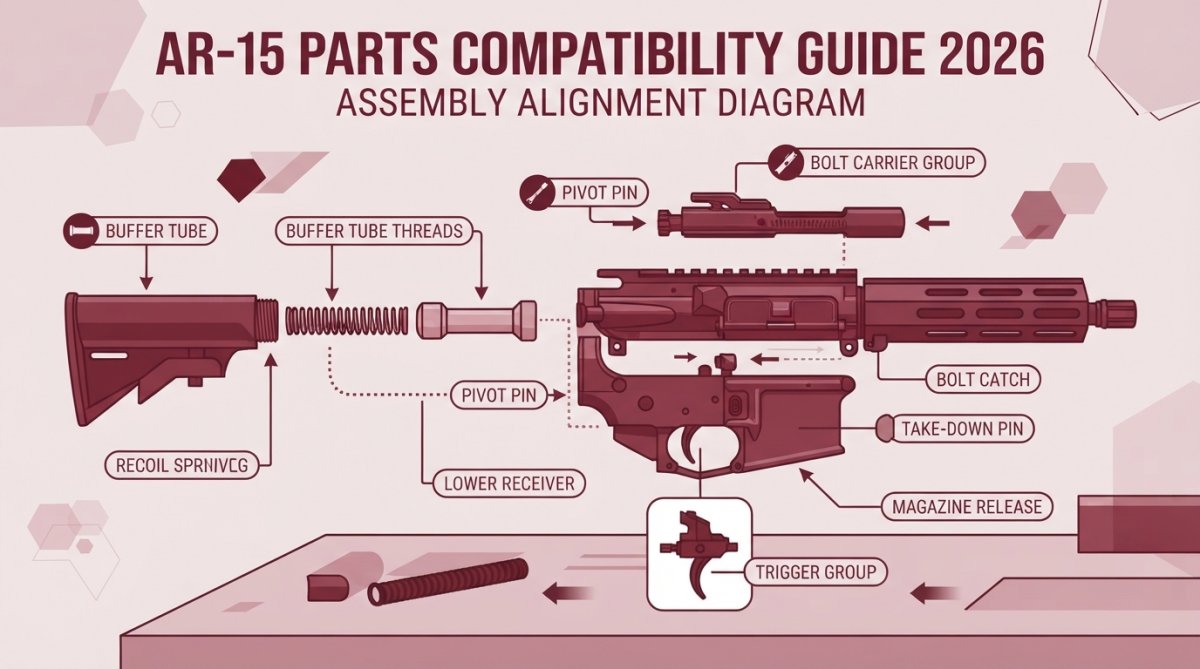
Aftermarket uppers from quality manufacturers typically publish specifications indicating mil-spec or commercial compatibility.
Buffer System and Receiver Extension Compatibility
The buffer system, buffer tube, buffer weight, and spring, absorbs recoil energy and cycles the bolt carrier group. AR-15 buffer tubes come in three primary configurations: commercial (1.17-inch diameter), mil-spec (1.168-inch diameter), and pistol-length (shorter tube for braced or short-barreled rifles). A commercial buffer tube will not seat securely in a mil-spec lower receiver.
Buffer weight selection depends on caliber, barrel length, and gas system length. A 5.56 NATO with a 16-inch barrel and rifle-length gas system requires a different buffer weight than a .300 Blackout with a 10-inch barrel and pistol-length gas system.
Gas system length matching is non-negotiable. Rifle-length gas systems (12.5+ inches) work with carbine-length systems only when the barrel is long enough to accommodate the gas port location. A pistol-length gas system on a 16-inch barrel creates dangerous overpressure.
Mismatched buffer systems and gas lengths cause carrier tilt, where the bolt carrier doesn’t cycle parallel to the receiver rails. This creates binding, premature wear, and potential catastrophic failure. Always verify gas system length before ordering a buffer tube.
Glock Generation Compatibility and Clone Variants
Glock platform builds represent a different compatibility challenge than AR-15 modularity. Glock uses serialized lower receivers (frames), and generation differences create significant fitment issues.
Gen3 vs. Gen5 Differences and Cross-Generation Fitment
Glock redesigned its frame between Gen3 and Gen5, introducing changes that affect trigger group compatibility, optic mounting, and grip texture. These changes are not backward compatible in all cases.
Gen3 frames accept Gen3-specific trigger groups, safeties, and firing pin housings. Gen5 frames introduced a different trigger housing geometry and removed the finger grooves. A Gen3 trigger group will not function properly in a Gen5 frame without modification.
Gen5 Glocks introduced an integrated optic cut (MOS, Modular Optic System). Gen3 frames require aftermarket optic cuts. Mixing Gen3 frames with Gen5 optic plates results in improper optic height and potential sight misalignment.
Lower Receiver and Trigger Group Interchangeability
Glock platform "lower receivers" are actually frames, and they’re the serialized component under federal law. Trigger groups, firing pin housings, and safeties must match the frame generation and manufacturer specifications.
Aftermarket trigger groups are engineered for specific frame types. A flat-faced trigger designed for Gen3 clones may have different geometry than a trigger for Gen3 OEM Glocks. Safety lever compatibility is equally critical. Glock frames have a specific plunger hole dimension and spring seat. Aftermarket safeties from different manufacturers may have slightly different plunger geometry.
When building on a Glock clone, source your entire trigger group and safety kit from the same manufacturer. Cross-mixing components from different aftermarket suppliers introduces tolerance stacking that creates binding and reliability issues.
ATF Regulations on Firearm Modifications and Legal Compliance
Federal regulations governing firearm modifications changed significantly in 2026, and builders must understand how these changes affect component selection and assembly practices.
2026 Regulatory Changes Affecting Component Swaps
The ATF released updated guidance on firearm modification definitions in March 2026, clarifying which component changes constitute manufacturing a firearm versus maintaining an existing firearm. Swapping upper receivers on an AR-15 lower is legal because the lower is the regulated receiver. However, certain modifications now require documentation. According to ATF guidance on firearm modifications, modifying a firearm’s function through component changes that alter pressure, velocity, or caliber classification requires proper documentation and compliance with state and local laws.
Caliber conversions require particular attention. Converting a 5.56 NATO upper to a .300 Blackout upper is legal. However, converting a centerfire rifle to fire rimfire ammunition (or vice versa) may trigger different regulatory requirements depending on state jurisdiction.
Receivers manufactured from 80% blanks occupy a gray area. Builders should verify current status before ordering or completing 80% receivers, as regulations changed mid-year.
Brace Regulations and Receiver Extension Rules
The 2026 guidance clarified that braces designed to be shouldered (fired from the shoulder) convert a pistol to a short-barreled rifle (SBR), requiring federal registration and tax stamp.
This affects component selection directly. Receiver extensions (buffer tubes) designed for braced pistol builds must be compatible with specific brace models. A brace designed for a commercial buffer tube won’t fit a mil-spec tube. Builders planning braced builds must verify that their chosen brace model works with their lower receiver type and buffer tube diameter.
Best Practices for Custom Firearm Assembly and Fitment
Successful custom builds follow a systematic approach to component verification and assembly.
OEM vs. Aftermarket Tolerance Standards
Original Equipment Manufacturer (OEM) components maintain tighter tolerances than many aftermarket alternatives. Glock OEM parts are manufactured to mil-spec standards with quality control processes that exceed most aftermarket suppliers.
Aftermarket components vary widely in tolerance control. Premium aftermarket manufacturers maintain tolerances within 0.001 inches. Budget aftermarket components may have tolerance stacks of 0.005 inches or more. This difference determines whether a component functions flawlessly or binds under firing stress.
When building a custom firearm, mixing OEM and aftermarket components requires understanding tolerance stacking. If an OEM lower has a trigger group hole dimension of 1.250 inches with a tolerance of ±0.001 inches, and an aftermarket trigger group pin has a dimension of 1.249 inches with a tolerance of ±0.002 inches, the worst-case clearance is 0.004 inches, acceptable but tight.
Budget-conscious builders who want reliability without OEM pricing should focus on sourcing critical components (lower receiver, barrel, bolt carrier group) from manufacturers with documented tolerance standards, then use quality aftermarket furniture and small parts.
Step-by-Step Verification and Testing
Before firing a custom build, systematic verification prevents catastrophic failures.
Step 1: Dry Fire Function Check. Without ammunition, cycle the bolt carrier group through its full range of motion. The charging handle should move smoothly without binding. The bolt should close fully and lock. The trigger should break cleanly without creep or overtravel. Time required: 5 minutes.
Step 2: Loaded Chamber Indicator Function. If equipped, verify that the loaded chamber indicator operates smoothly. Time required: 2 minutes.
Step 3: Safety Lever Operation. Cycle the safety lever from safe to fire position repeatedly. It should move smoothly without excessive resistance. Time required: 3 minutes.
Step 4: Magazine Compatibility. Load magazines with dummy rounds (inert rounds without primer or powder). Feed each round into the chamber by hand-cycling the bolt. Test with at least three different magazines. Time required: 10 minutes.
Step 5: Optic Mounting Verification. If equipped with optics, verify that the optic is mounted securely and that the reticle is centered in the field of view. Time required: 5 minutes.
Step 6: Function Fire at Range. Fire 10 rounds slowly, observing for any signs of binding, incomplete cycling, or feeding issues. If all rounds function smoothly, fire 20 more rounds at normal pace. Time required: 30 minutes.
These steps identify 95% of compatibility issues before they cause dangerous failures.
Visual Compatibility Matrices and Reference Tools
Understanding compatibility requires reference tools that cross-check platforms, calibers, and component types.
Cross-Reference Charts for Common Platforms
AR-15 platform builds require matching upper receivers to lower receivers, buffer systems to receiver extensions, and gas systems to barrel lengths. For Glock platform builds, generation compatibility and frame material (polymer vs. aluminum) affect trigger group selection.
The firearm component compatibility guide 2026 emphasizes that compatibility matrices must be platform-specific and caliber-specific. A matrix showing AR-15 compatibility is useless for Glock builds. A matrix showing 5.56 NATO compatibility is misleading when applied to .300 Blackout builds.
Gas System Length and Barrel Specifications
Gas system length determines buffer weight requirements and cycling reliability. Rifle-length gas systems operate at approximately 12.5 inches from the muzzle to the gas port. Carbine-length systems operate at approximately 10 inches. Pistol-length systems operate at approximately 7 inches.
A 16-inch barrel with a rifle-length gas system requires a rifle-length buffer tube and buffer weight matched to that system. A 16-inch barrel with a carbine-length gas system requires a carbine-length buffer tube and lighter buffer weight.
Suppressed builds add complexity. A suppressed rifle cycles at higher pressure, requiring heavier buffer weights or adjustable gas blocks to prevent over-cycling.
Common Fitment Mistakes and How to Avoid Them
Experience teaches what theoretical knowledge cannot. These mistakes recur across builders because the underlying causes are subtle and easily overlooked.
Drop-In Kit Binding and Assembly Issues
Drop-in kits promise plug-and-play simplicity, yet binding remains the most common complaint. A drop-in trigger group designed for mil-spec receivers may bind slightly in commercial receivers because the trigger housing bore is 0.003 inches larger in commercial receivers.
Drop-in safety kits suffer the same issue. A safety designed for Gen3 Glock clones may have plunger geometry that binds in certain frame manufacturers’ products. The solution isn’t to force the component, it’s to identify which frame manufacturer’s geometry matches the safety design.
Optic Footprint and Mounting Standard Mismatches
Optic mounting standards proliferated across platforms, creating confusion about what mounts where. AR-15 Picatinny rails differ from Glock MOS cuts. Glock MOS cuts differ between Gen3 and Gen5. An optic mount designed for one platform won’t function on another.
Mounting height mismatches create another problem. An optic mounted too high causes poor cheek weld and sight picture issues. An optic mounted too low may contact the charging handle or other components. Verify the mounting footprint before purchasing any optic.
Custom firearm builds succeed when every component works in harmony with every other component. Compatibility extends beyond mechanical fit to tolerance stacking, regulatory compliance, and systematic verification. Get your Flatties here!!!
Frequently Asked Questions
Are all AR-15 parts interchangeable between different manufacturers?
Not automatically. While AR-15 platforms follow industry assembly standards, tolerance stacking varies between OEM and aftermarket manufacturers. Upper receivers, bolt carrier groups, and buffer systems must match gas system length and barrel specifications. Always verify compatibility with technical specifications before assembly. Some clone variants have proprietary dimensions that require matching components from the same manufacturer line.
How do I verify if a firearm component is compatible with my specific platform?
Start by identifying your exact platform and generation (AR-15 variant, Glock Gen3 vs. Gen5, etc.). Cross-reference the component's technical specifications against your receiver's requirements. Check gas system length, barrel extension type, and optic footprint standards. Use visual compatibility matrices and manufacturer documentation. Test fit non-permanent components before final assembly. If uncertain, consult platform-specific forums or contact the component manufacturer directly for fitment confirmation.
What are the main differences between OEM and aftermarket tolerance standards?
OEM components typically maintain tighter, more consistent tolerances across production batches. Aftermarket parts vary more widely depending on manufacturer quality control. This tolerance variation can cause binding issues in drop-in kits if components stack poorly. Higher-quality aftermarket manufacturers test for compatibility across multiple platforms. Budget-friendly options may require minor fitting or modifications. Always review customer feedback on fitment before purchasing aftermarket components for precision-critical builds.
How do ATF regulations affect my ability to swap firearm components in 2026?
Recent ATF guidance focuses on receiver definitions and functional firearm status. Swapping components like triggers, safety levers, or brace systems can affect legal classification. Brace regulations specifically impact receiver extensions and buffer system configurations. Interstate transport rules apply to completed receivers. Stay current with ATF guidance documents and consult legal resources before major component changes. Component modifications that alter firearm function may trigger regulatory scrutiny, particularly regarding receiver status and modular design configurations.
What causes binding issues in drop-in trigger kits and super safety components?
Binding typically results from tolerance stack-up between the lower receiver, trigger group housing, and internal components. Anodized aluminum housings sometimes have inconsistent wall thickness, causing friction. Stainless steel trigger bar geometry varies slightly between manufacturers. Test fit components before final installation. File or stone any high spots carefully if binding occurs. Quality manufacturers test across multiple receiver types to prevent binding. Budget kits are more prone to this issue due to less rigorous tolerance control during manufacturing.
How do I know if an optic mounting system is compatible with my platform?
Identify your optic footprint standard: Picatinny rail, M-LOK, KeyMod, or proprietary mounts. Check your receiver's mounting interface and confirm the optic's base matches. Suppressor-height sights require specific receiver cuts and optic footprint clearance. Verify rail attachment method (screw-in, clamp-on, or integrated). Measure optic height above bore to ensure proper sight picture. Cross-reference your specific platform variant, as clone designs sometimes use non-standard mounting surfaces. Test fit before purchasing to avoid compatibility surprises.
What warranty or durability guarantees should I expect from quality aftermarket components?
Reputable manufacturers typically offer warranties against defects in materials and workmanship, usually 1-2 years. Anodized aluminum and stainless steel construction should withstand normal use without premature wear. Quality trigger components should maintain consistent pull weight over thousands of cycles. Avoid components with vague warranty language or no published standards. Request test data showing pull weight consistency if precision matters for your shooting discipline. Budget components may lack formal warranties, making customer reviews essential for assessing real-world durability and reliability.
This article was written using GrandRanker