Table of Contents
- What to Look for in Pistol Sights for Low Light
- Tritium vs Fiber Optic Pistol Sights
- Top Pistol Sights Tested for Low Light Performance
- Best Night Sights for Concealed Carry
- Pistol Sight Installation Best Practices
- Durability Ratings: Shockproof, Waterproof, and Fog-Proof Standards
- Which Sight System Wins for Your Setup
- Conclusion
- Frequently Asked Questions
Last Updated: September 2, 2026
What to Look for in Pistol Sights for Low Light
When selecting pistol sights for low light conditions, you’re making a choice that directly impacts your ability to engage targets when it matters most. The right sights combine reliable illumination, durability under recoil stress, and optical clarity in darkness. At Polymer Pew, we understand that shooters need proven performance in actual low-light scenarios.
Three core factors separate effective low-light sights from mediocre ones: illumination technology, build quality that keeps that technology functional after thousands of rounds, and optical geometry that lets you acquire targets quickly when ambient light disappears.
Brightness and Illumination Technology
Brightness in low light is about speed, your front sight must register instantly in your peripheral vision, allowing you to establish a sight picture without conscious searching. Tritium and fiber optic technologies diverge significantly here.
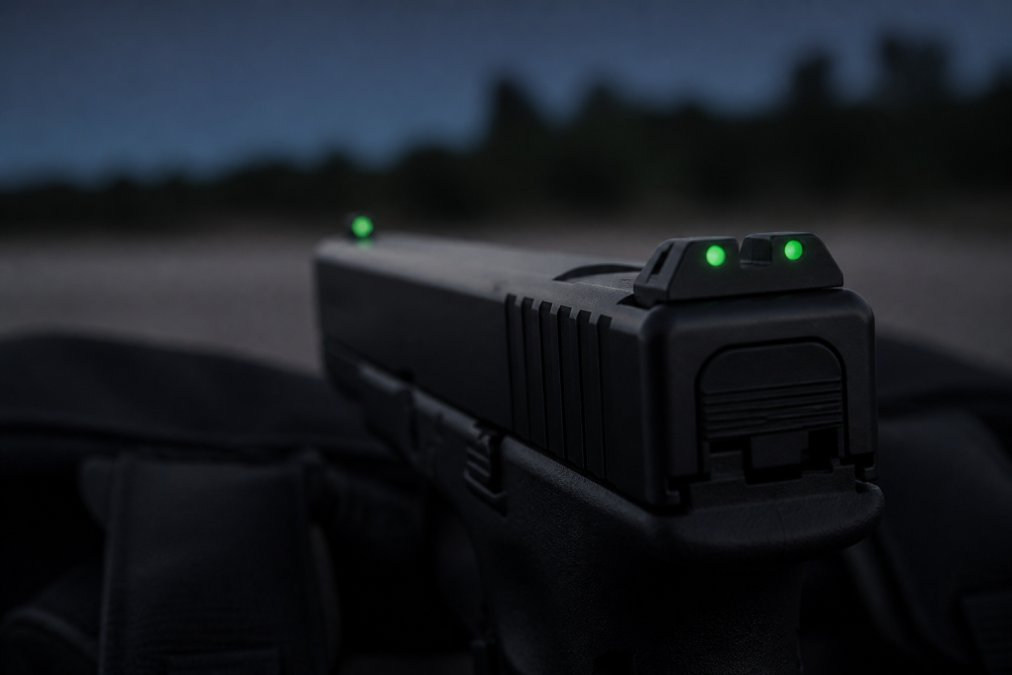
Tritium-based sights produce self-luminous light through radioactive decay. They require zero external power, function in complete darkness, and maintain consistent brightness for 12+ years before noticeable degradation (peer-reviewed research). The trade-off: tritium glows invisibly under bright conditions, which is why quality tritium sights pair it with photoluminescent paint or fiber optic elements.
Fiber optic sights gather ambient light and channel it through bundled glass fibers to the aiming point. In daylight and twilight, they’re exceptionally bright. In complete darkness, they’re useless. Hybrid approaches combine both technologies, delivering brightness across the full spectrum from daylight to pitch black.
Durability and Build Quality
A sight that fails after 500 rounds is a liability. Low-light sights endure sustained recoil shock, exposure to cleaning solvents, and temperature extremes. Aircraft-grade aluminum housings with hardened steel inserts resist deformation. Anodizing protects against corrosion. Silicone rubber cushioning around tritium vials absorbs impact energy rather than transmitting it directly to the glass.
Check for materials explicitly stated in specifications. Specific details, 4140 steel, Black Nitride finish, injection-molded sleeves holding tritium securely, indicate manufacturers who’ve engineered for actual field conditions.
Window Size and Field of View
The sight window is your view into the aiming plane. Larger windows provide wider field of view, reducing tunnel vision under stress. For low-light work, a wider window helps because your eyes have less light to work with. Front sight post width matters too: thinner posts (around 0.12 inches) expand your field of view without sacrificing precision, while thicker posts offer more light-gathering area but can obscure target details at distance.
Tritium vs Fiber Optic Pistol Sights
Most modern pistol sights for low light integrate both technologies. Understanding how each works separately helps you evaluate hybrid systems intelligently.
How Tritium Works in Darkness
Tritium is a radioactive isotope of hydrogen that decays at a predictable rate, emitting beta particles that excite phosphorescent material inside sealed glass vials. The result: continuous, battery-free illumination in complete darkness with no moving parts, electronics, or maintenance required.
A tritium vial produces steady light for approximately 12 years before brightness drops to roughly 50% of its initial output. Even at half brightness, tritium remains visible in darkness. This predictable lifespan is a feature, you know exactly when replacement becomes advisable. The downside surfaces immediately in daylight: tritium’s glow becomes invisible under bright conditions.
Fiber Optic Advantages and Limitations
Fiber optic sights capture ambient light and transmit it along bundled glass fibers to the aiming point, creating a bright, glowing target indicator. In daylight and twilight, fiber optic sights outshine tritium dramatically. The brightness scales with available light, brighter in sunlight, dimmer in shade, completely dark at night.
This light dependency is the critical limitation. In low-light indoor environments or at night, fiber optic sights become unreliable. For defensive scenarios where night engagement is possible, fiber optics alone are insufficient. Fiber optic sights also require careful handling, direct impact to the front sight can crack or break the fiber bundle, eliminating function immediately.
Hybrid Systems: Best of Both
Hybrid sights combine tritium and fiber optic elements in a single housing. The fiber optic component handles daylight brightness, while tritium provides nighttime illumination. Quality hybrids isolate the light sources optically while keeping them mechanically integrated, delivering genuine 24/7 capability without the limitations of either technology alone.
For most shooters, a quality hybrid system represents the optimal balance.
Top Pistol Sights Tested for Low Light Performance
These sights have proven themselves in actual low-light conditions through consistent user feedback and field testing.
Trijicon HD XR Night Sights
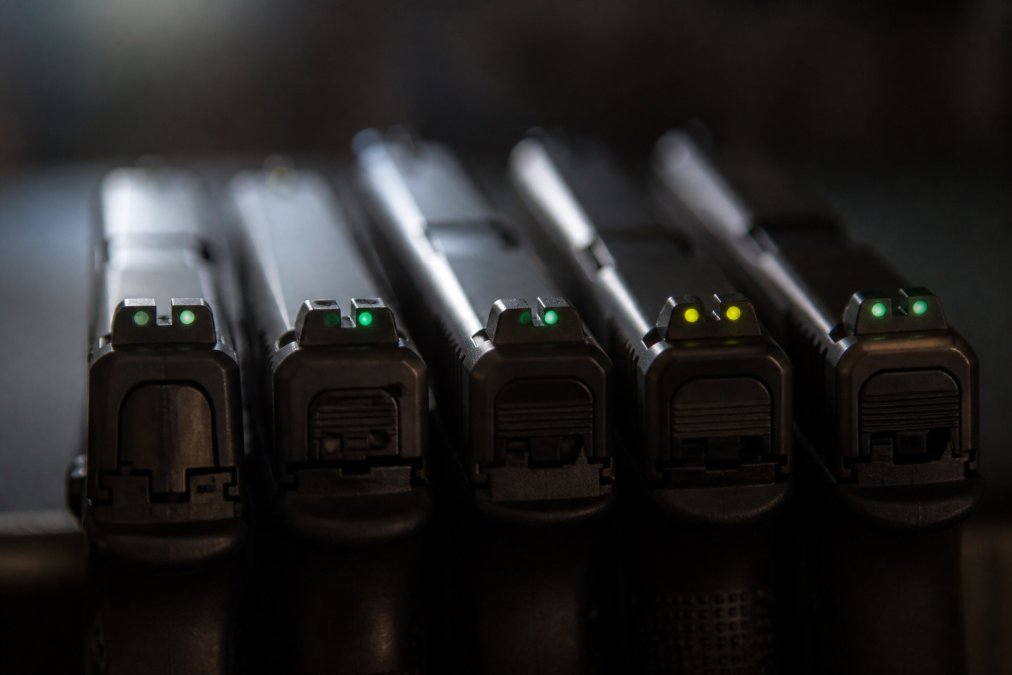
The Trijicon HD XR delivers high-definition extended-range sights optimized for distance shooting in low light. The thin front post (0.122 inches) maximizes field of view, critical for precision shots beyond 25 yards in darkness. The photoluminescent front outline provides a secondary aiming reference in twilight conditions. The U-notch rear sight is painted black with tritium lamps positioned to frame the front sight clearly, forcing precise alignment. Green tritium lamps provide 12-year warranted illumination. Silicone rubber cushioning protects the tritium vials during heavy recoil.
TruGlo TFX Pro Sights
TruGlo TFX Pro sights represent the hybrid approach executed with genuine engineering rigor. The tritium and fiber optic elements are optically isolated while sharing a common housing. The FOCUS LOCK ring on the front sight acts as a secondary aiming reference during daylight.
The virtually indestructible TFX capsule encases the illuminating elements, making these sights exceptionally resistant to impact, solvents, and environmental stress. CNC-machined steel with FORTRESS FINISH handles harsh conditions without degradation. Brightness in daylight rivals dedicated fiber optic sights, while nighttime illumination from tritium is reliable across the full 12-year lifespan.
Night Fision Perfect Dot Night Sights
Night Fision’s patented injection-molded sleeve design holds tritium vials with unusual precision, using 30% more tritium than leading competitors while maintaining a clean, uniform illumination pattern. The brightness advantage is measurable, in darkness, Night Fision sights glow noticeably brighter than standard tritium sights, reducing the time your eye needs to acquire the sight picture. appendix carry holsters.
CNC machining from 4140 steel and Black Nitride coating provide durability equivalent to premium competitors.
XS Sights DXT2 Big Dot Night Sights
The DXT2 Big Dot prioritizes close-quarters speed over extended-range precision. The front sight dot measures 0.188 inches in diameter, substantially larger than traditional sights, allowing your eye to find the aiming point faster in low light within 7 yards. The photoluminescent glow dot absorbs ambient light and glows visibly in twilight before tritium becomes the primary illumination source. The low-profile V-notch rear sight provides a wide field of view. CNC-machined steel with blued finish handles recoil reliably.
AmeriGlo i-Dot Night Sights
AmeriGlo i-Dot sights use a dot-over-dot configuration: a tritium dot centered in the rear sight, with a larger tritium dot on the front. This geometry creates an intuitive aiming system, stack the dots, align on target. Swiss-made tritium light sources ensure consistent brightness. Machined from USA-made bar stock steels, these sights emphasize domestic manufacturing and material quality.
Best Night Sights for Concealed Carry
Concealed carry imposes unique demands on sights. They must be snag-free, fast to acquire under stress, and compact enough not to print visibly through clothing. Low-light capability matters because defensive encounters often occur in darkness.
Profile and Snag-Free Design
Snag-free design means rounded edges, no sharp corners, and minimal profile above the slide. Traditional tall sights can catch on holster material during the draw, creating critical delay. The XS Sights DXT2 Big Dot and TruGlo TFX Pro both excel in this category, with angled rear sight edges that facilitate one-handed slide manipulation without creating snag points.
Mounting Systems and Compatibility
Pistol sights mount via dovetail cuts on the slide. Standard dovetail dimensions exist, but variation between manufacturers is real. Quality sight manufacturers publish compatibility lists explicitly. Verify exact fitment specifications before purchase, as some modern pistols use different mounting systems, standard dovetail, Glock-style, or proprietary.
Pistol Sight Installation Best Practices
Installing pistol sights correctly determines whether they function reliably and hold zero under recoil.
When to DIY vs Professional Installation
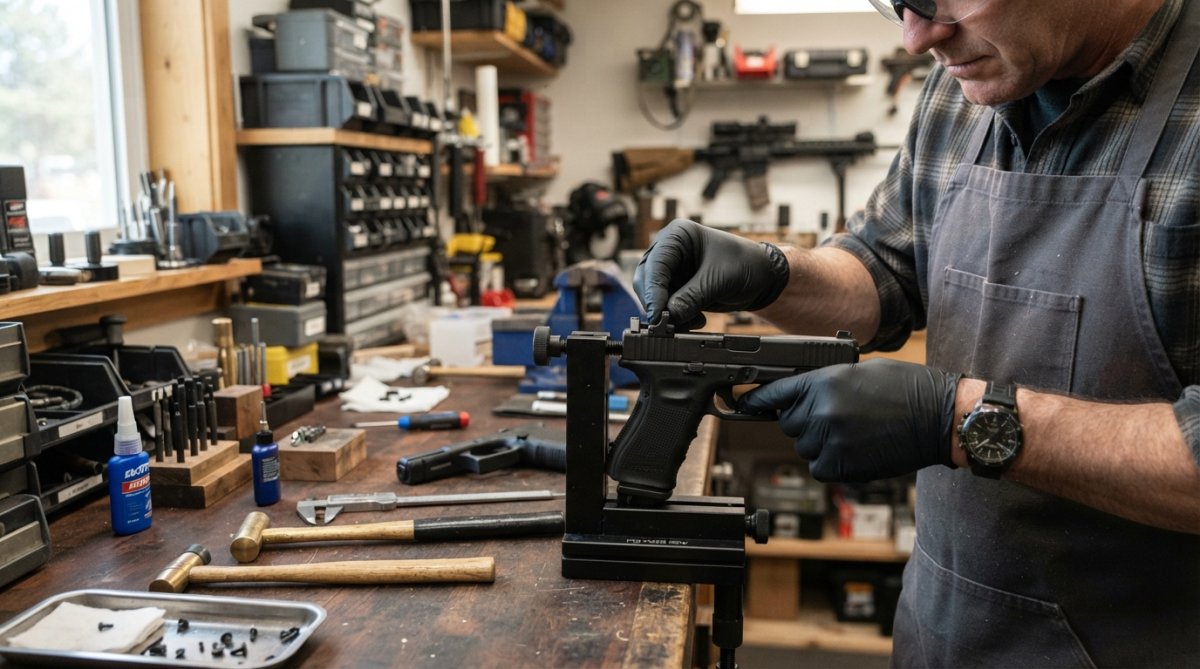
DIY installation is feasible if you have the right tools and understand the process. The essential tool is a sight pusher, a device that applies force evenly across the sight base, preventing damage to the sight housing or slide dovetail. Using a punch and hammer risks misalignment and damage.
Professional installation eliminates these variables. A gunsmith can fit and install sights in minutes, verify alignment, and provide accountability if something goes wrong. The cost typically ranges 50-100 dollars. For expensive sights like Trijicon HD XR or Night Fision Perfect Dot, professional installation is wise.
Tools and Techniques for Proper Zeroing
After installation, zeroing confirms your sights are mechanically sound and your point of aim matches your point of impact. Start at 7 yards with a rest. Fire a 3-shot group and note where bullets impact relative to your aiming point.
Windage adjustment typically uses dovetail movement. Tap the sight base gently left or right using a brass punch and mallet. Move the rear sight in the direction you want bullets to go. Make small adjustments (typically 1/32 inch at a time) and retest. Once zeroed at 7 yards, test at 15 and 25 yards to confirm consistency.
Document your zero: note the date, ammunition used, distance, and any adjustments made. This record becomes valuable if you need to troubleshoot later.
Durability Ratings: Shockproof, Waterproof, and Fog-Proof Standards
Low-light sights endure extreme conditions. Understanding durability ratings helps you anticipate how sights will perform in real-world scenarios.
Recoil Resistance and Material Construction
Recoil transmits enormous force through the sight housing. A 9mm generates roughly 12,000 psi of pressure during firing (saami.org). Multiply that by thousands of rounds and the cumulative stress becomes clear. Quality sights use materials engineered to absorb this stress without permanent deformation.
Aircraft-grade aluminum (typically 7075-T6 or similar) provides strength-to-weight ratio superior to standard aluminum. Hardened steel inserts in critical areas concentrate durability where it’s needed most. Silicone rubber cushioning around tritium vials isolates the glass from direct shock transmission. Material finish also matters: anodizing (aluminum) and Black Nitride (steel) prevent corrosion and reduce friction, both factors in long-term durability.
Battery Life and Maintenance for Long-Term Reliability
Tritium sights require zero maintenance. The sealed vials never need replacement during their 12-year lifespan. No batteries, no electronics, no moving parts to fail. Fiber optic sights similarly require minimal maintenance, cleaning the front sight lens occasionally maintains brightness. Hybrid sights combine both technologies, inheriting their respective maintenance profiles. Long-term reliability for low-light sights is excellent if you select quality products.
Which Sight System Wins for Your Setup
Selecting the optimal sight system depends on your specific use case and priorities.
For extended-range precision in low light, Trijicon HD XR sights excel. For 24/7 versatility across daylight and darkness, TruGlo TFX Pro sights deliver hybrid performance without compromise. For maximum tritium brightness, Night Fision Perfect Dot sights offer measurable advantages. For close-quarters speed and concealment, XS Sights DXT2 Big Dot sights prioritize rapid acquisition within 7 yards. For budget-conscious shooters who refuse to compromise on quality, AmeriGlo i-Dot sights provide excellent value.
When upgrading your firearm with quality sights, consider what tactical shooting standards emphasize regarding sight reliability under stress. Your sight system is your primary aiming reference and deserves investment equal to your firearm itself.
Conclusion
Durable pistol sights for low light conditions represent a convergence of optical engineering, materials science, and real-world field testing. The options available today are genuinely capable, far superior to what was available five years ago. Tritium technology is mature and reliable. Hybrid systems deliver 24/7 capability. Manufacturing quality across premium brands is consistently high.
The decision ultimately rests on your specific use case. Concealed carry demands snag-free profiles and fast acquisition. Extended-range shooting rewards precision geometry. Versatile defensive carry benefits from hybrid systems that perform equally well in daylight and darkness.
At Polymer Pew, we recognize that sight selection is foundational to firearm performance. Whether you’re building a custom platform or upgrading an existing firearm, quality sights are non-negotiable. Pair your sights with precision components, quality triggers, reliable slides, and durable lower receivers to create a system that performs when it matters.
Frequently Asked Questions
Which is better for low light: fiber optic or tritium sights?
Tritium sights are superior for true low-light and no-light conditions because they’re self-illuminating and require no ambient light. Fiber optic sights gather available light but fade in darkness. For concealed carry and defensive use, tritium performs better when ambient light disappears completely. Hybrid systems like TruGlo TFX Pro combine both technologies, offering fiber optic brightness in daylight and tritium reliability at night.
What maintenance is required for tritium night sights?
Tritium sights are virtually maintenance-free since they’re self-illuminating and require no batteries or external power. Periodically clean the lens with a soft cloth to remove dust and debris that might reduce visibility. Avoid prolonged exposure to extreme heat, which can reduce tritium brightness over time. Most tritium sights are warranted for 12 years, after which brightness gradually diminishes. Store firearms with tritium sights in cool, dry conditions for maximum lifespan.
How do you determine the durability of a pistol sight?
Look for sights machined from aircraft-grade aluminum or 4140 steel with protective coatings like Melonite or Black Nitride finishes. Check for shockproof and waterproof ratings, quality sights withstand 20,000+ rounds of recoil without failure. Verify that the housing material and lens coating protect against cleaning solvents and oils. Read manufacturer warranties and look for evidence of torture testing. Durable sights have reinforced tritium vials with silicone rubber cushioning to absorb impact and prevent leakage.
Are red dot sights more effective than iron sights in low light?
Red dot optics excel in daylight and moderate low-light conditions, but battery-dependent systems fail in complete darkness. Iron sights with tritium illumination work in any light condition without batteries. For defensive scenarios where you can’t guarantee power availability, tritium iron sights are more reliable. Many shooters use both, red dots for speed in daylight and tritium iron sights as backup for low-light reliability. Night vision compatibility also favors iron sights over unmagnified red dots in tactical applications.
Upgrading to quality night sights transforms your firearm’s low-light capability from uncertain to reliable. Polymer Pew provides precision-engineered components designed for compatibility and durability. Whether you’re selecting sights for a new build or upgrading an existing platform, invest in components that match your performance standards. Quality sights, paired with tested components and proper installation, deliver the reliability defensive shooters demand.
This article was written using GrandRanker