Table of Contents
- Why Proper Firearm Maintenance Matters
- Best Gun Cleaning Kit for Beginners
- Solvents and Lubricants Every Owner Needs
- Gun Vises and Work Surfaces
- How to Clean a Firearm Safely
- Firearm Maintenance Schedule for Long-Term Care
- Tools for Sight Adjustment and Precision Work
- Building Your Maintenance Kit on a Budget
Last Updated: August 29, 2026
Why Proper Firearm Maintenance Matters
Firearm maintenance is the difference between a reliable tool and one that fails when you need it. Neglecting your firearm leads to corrosion, fouling buildup, and mechanical failures that compromise safety and accuracy. Regular cleaning extends your firearm’s lifespan, preserves resale value, and ensures consistent performance.
Many gun owners delay maintenance assuming it requires specialized knowledge or expensive equipment. That’s a myth. With the right essential firearm maintenance tools for beginners, anyone can keep their firearms in top condition. Proper maintenance also builds familiarity with your firearm. When you regularly disassemble, clean, and reassemble your gun, you develop a deeper understanding of how it functions. This knowledge translates directly to better handling, faster troubleshooting, and safer operation. At Polymer Pew, we believe that educated gun owners make responsible gun owners, and maintenance education is foundational to that responsibility.
Best Gun Cleaning Kit for Beginners
A complete gun cleaning kit is your starting point, combining organization, versatility, and durability in one package.
What a Complete Cleaning Kit Includes
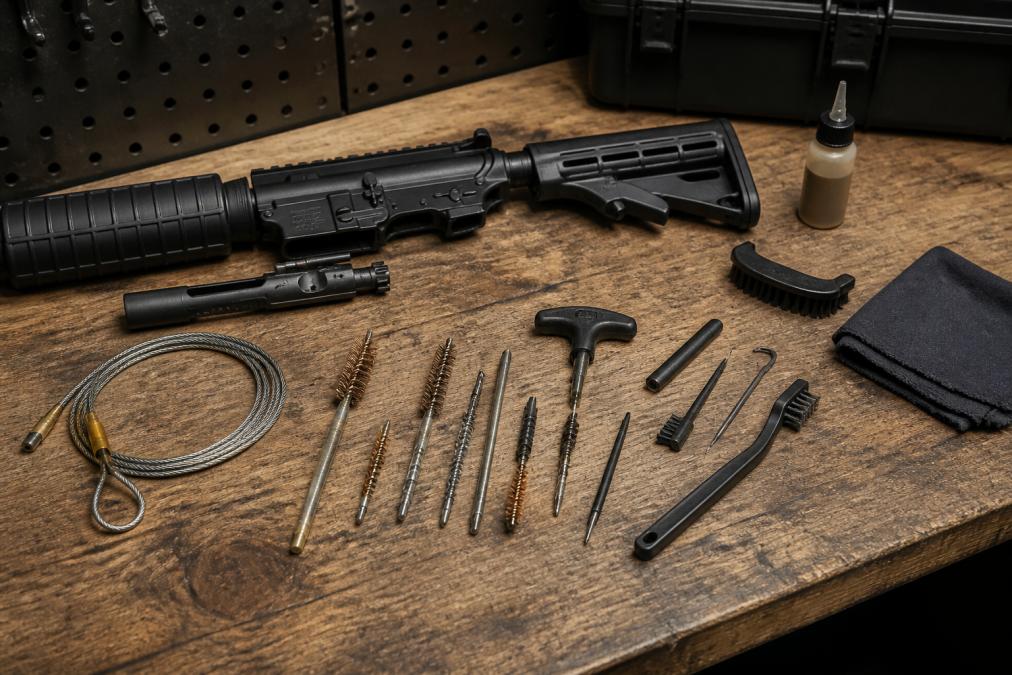
A quality cleaning kit should contain brass cleaning rods, bronze brushes in multiple calibers, cleaning patches, a multi-function rod handle, and organized storage. The Real Avid Gun Boss Pro Universal Cleaning Kit exemplifies this with its patent-pending kickstand case that displays tools at an accessible angle. The kit includes brass rods extending to 32 inches, labeled components for easy identification, and a multi-function rod handle combining a tap hammer surface with rotating and fixed receivers.
Brass rods matter because they won’t damage your firearm’s bore, unlike steel rods that can scratch or dent the interior. Bronze brushes effectively remove carbon fouling without over-aggressive scrubbing. The kit’s universal compatibility covers firearms from .22 to .45 caliber and 12 or 20 gauge shotguns, making it practical whether you own one firearm or several. Organization separates beginner kits from scattered tool drawers, when everything has a designated spot, you’ll actually use your kit regularly.
Rod-Based vs. One-Pass Cleaners
Rod-based systems like the Real Avid Gun Boss Pro offer thorough, multi-step cleaning. You push the rod through the bore with patches and brushes, controlling the process and targeting stubborn fouling. This method takes longer but delivers comprehensive results, especially for heavily fouled barrels.
One-pass cleaners like the Hoppe’s BoreSnake and Otis Technology Ripcord prioritize speed and convenience. These tools combine a bronze brush and cleaning area in a single pass, loosening large particles and swabbing the bore clean in seconds. They’re portable and ideal for quick maintenance between shooting sessions. Many experienced shooters keep both, a one-pass cleaner in their range bag for immediate post-shoot cleanup and a full kit at home for detailed cleaning. For beginners focused on learning proper technique, a rod-based kit builds better habits and understanding.
Solvents and Lubricants Every Owner Needs
Solvents remove fouling; lubricants reduce friction and protect against corrosion.
Hoppe’s No. 9 Gun Bore Cleaner is the classic choice, proven across generations of firearm owners. It effectively removes primer, powder, lead, and metal fouling while providing rust prevention. The fast-penetrating formula works efficiently for both light and heavy fouling. Proper ventilation during use is essential due to its strong odor.
Break-Free CLP combines cleaning, lubrication, and preservation in one formula. This all-in-one product performs in extreme temperatures from -65°F to +475°F and doesn’t break down into gummy residue (peer-reviewed research). It’s trusted by military and law enforcement, which speaks to its reliability.
Breakthrough Clean Technologies Battle Born Grease addresses high-friction areas that oils alone can’t protect. Formulated with pure synthetic oils and sub-micron PTFE particles, it withstands extreme temperatures and protects against wear and corrosion (peer-reviewed research). Use grease on parts like the bolt carrier group and trigger mechanism where high friction generates heat.
A common mistake is using the wrong product for the job. Bore cleaner isn’t a lubricant, it’s designed to dissolve fouling. Use solvents to clean, then apply appropriate lubricants to moving parts and high-friction areas.
Gun Vises and Work Surfaces
A stable work surface transforms maintenance from awkward wrestling with your firearm to controlled, precise work.
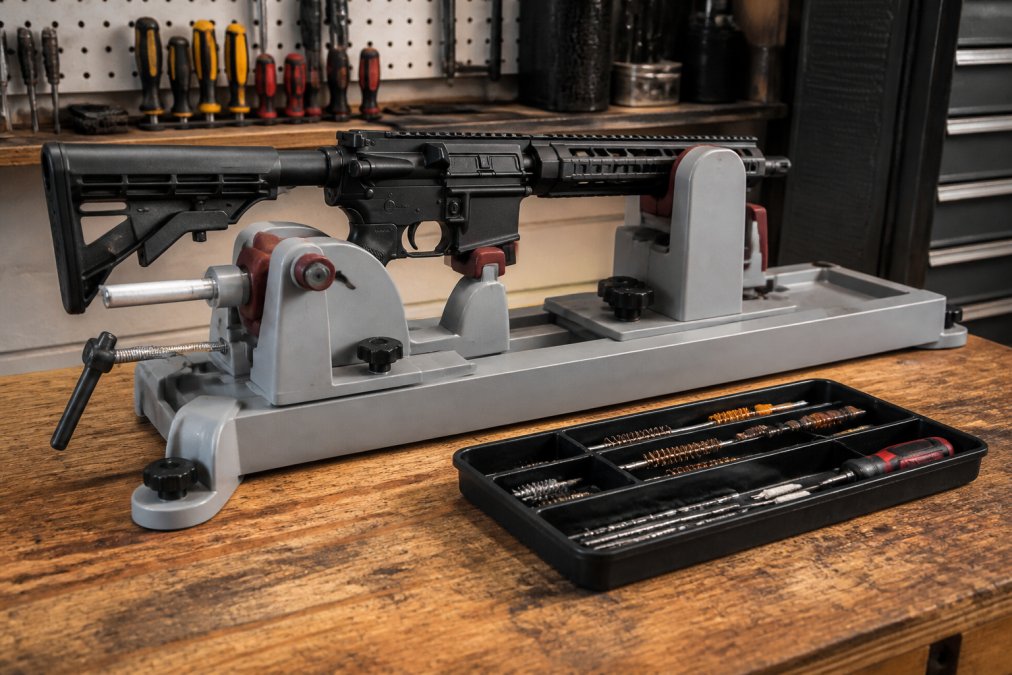
The Tipton Best Gun Vise provides the adjustability and security serious maintenance demands. Its central aluminum channel allows ideal positioning of components, while adjustable front, center, and rear supports accommodate everything from bolt-action rifles to AR-15s to handguns. Non-marring contact surfaces protect your firearm’s finish, and the vise is constructed from solvent-resistant material.
Beyond the vise itself, a quality cleaning mat protects your workspace and organizes components. The Real Avid Smart Mat XL Universal provides an oversized work area (47.25" x 19.625") with oil and solvent-resistant surface. The non-skid backing keeps it stable, while integrated parts and tool storage trays keep everything accessible. A detachable small parts storage case secures tiny components like springs and pins that are easy to lose.
How to Clean a Firearm Safely
Safety comes first, always.
Safety Gear and Workspace Setup
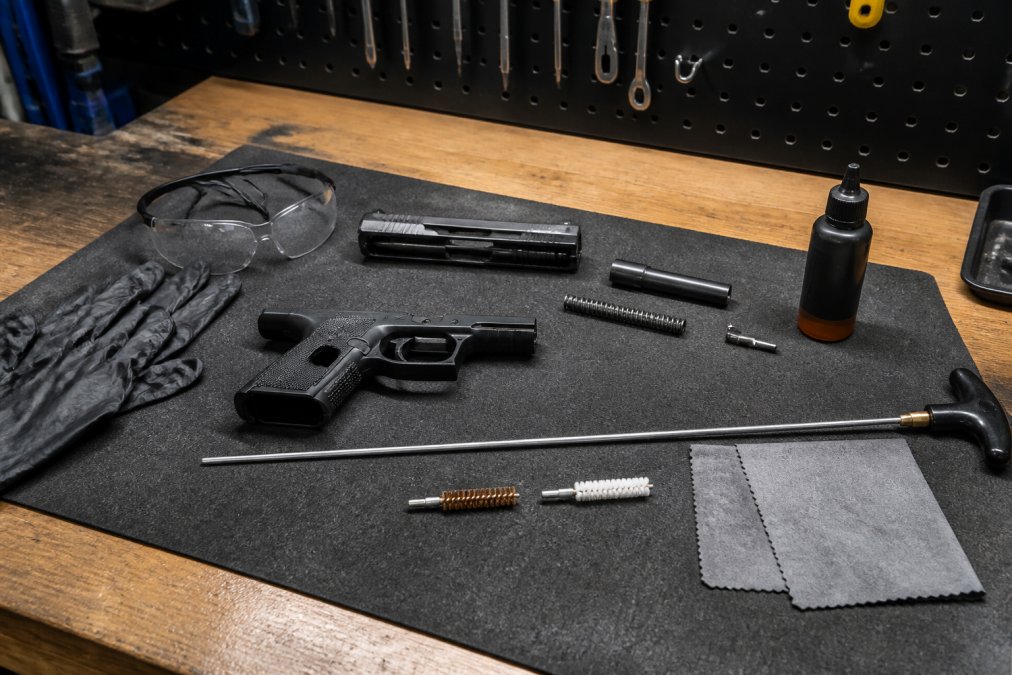
Wear protective eyewear and nitrile gloves during all maintenance. Solvents can splash, and fouling particles can become airborne. Work in a well-ventilated area, an open window or garage door provides adequate ventilation for home maintenance.
Ensure your firearm is completely unloaded before beginning any maintenance. Remove the magazine, visually inspect the chamber, and physically confirm the firearm is empty. Treat every firearm as if it’s loaded until you’ve personally verified otherwise. cleaning hunting optics.
Lay out all your tools before you start. Know where your solvent, brushes, patches, and lubricant are positioned. This preparation prevents confusion and keeps work flowing smoothly.
Step-by-Step Cleaning Process
Step 1: Field strip your firearm. Remove the bolt carrier group, barrel, and other major components according to your firearm’s manual. Don’t attempt full disassembly unless you’re experienced.
Step 2: Apply solvent to the bore. Use a cleaning rod with a patch holder. Attach a patch soaked in solvent and push it through the bore from breech to muzzle. Let the solvent sit for a few minutes to penetrate stubborn buildup.
Step 3: Brush the bore. Attach a bronze brush to your cleaning rod and push it through the bore 10-15 times. The brush scrubs away carbon and fouling that solvent loosened.
Step 4: Patch the bore clean. Attach a clean patch to your rod and push it through. Repeat with fresh patches until they come out clean. Continue until patches emerge without visible discoloration.
Step 5: Lubricate appropriately. Apply a light coat of lubricant to the bore using a patch. Don’t oversaturate, as excess lubricant attracts fouling. For the bolt carrier group and other moving parts, apply lubricant sparingly to high-friction surfaces and wipe away excess.
Step 6: Reassemble carefully. Follow your firearm’s manual precisely. Pay attention to spring tension and component orientation. If something doesn’t feel right, stop and consult your manual or a qualified gunsmith.
The entire process typically takes 20-30 minutes for a rifle (nssf.org). Handguns clean faster due to shorter barrels.
Firearm Maintenance Schedule for Long-Term Care
Consistency matters more than intensity. Regular light maintenance beats occasional deep cleaning for keeping firearms reliable.
After every shooting session: Run a one-pass cleaner through the bore or do a quick field cleaning. This removes loose fouling while it’s fresh and prevents buildup from hardening.
Every 500 rounds or monthly (whichever comes first): Perform a full cleaning with your rod-based kit. Field strip, brush the bore thoroughly, patch until clean, and lubricate appropriately.
Every 2,000 rounds or quarterly: Deep clean with extra attention to the bolt carrier group and other high-friction components. This prevents wear and maintains reliability.
Seasonally (every 3 months): Inspect for corrosion, especially if your firearm has been exposed to moisture or salt air. Wipe down all surfaces with a lightly oiled cloth and check that all fasteners are tight.
Annually: If your firearm sits unused for extended periods, wipe it down with protective oil and verify function.
The schedule adapts to your usage. A firearm shot weekly needs more frequent attention than one shot monthly. Listen to your firearm, if it’s becoming sluggish or developing resistance, maintenance is overdue.
Tools for Sight Adjustment and Precision Work
Once you master basic cleaning, precision work opens new possibilities. Sight adjustment and component torquing require specific tools.
The Wheeler Engineering F.A.T. Wrench applies precise, repeatable torque settings from 10 to 65 inch-pounds in 1 inch-pound increments. Over-tightening scope rings or guard screws damages components and ruins accuracy. Under-tightening allows movement that destroys zero. The F.A.T. Wrench removes guesswork and includes 10 phosphate-coated S2 tool steel bits covering common firearm screws.
Sight adjustment requires punch sets and specialized tools depending on your sight type. Brass hammers prevent marring, while steel hammers can damage aluminum and steel components.
Building Your Maintenance Kit on a Budget
Quality maintenance tools don’t require premium pricing. Strategic purchases build a capable kit without breaking the budget.
Start with the Real Avid Gun Boss Pro Universal Cleaning Kit as your foundation. Add Hoppe’s No. 9 solvent and Break-Free CLP for cleaning and lubrication. These three purchases cover 95% of routine maintenance needs.
Next, invest in a quality cleaning mat and small parts storage. The Real Avid Smart Mat XL protects your workspace and keeps components organized.
As your skills develop, add specialized tools one at a time. A gun vise becomes your third major purchase once you’re confident in maintenance routines. The Wheeler Engineering F.A.T. Wrench follows when you’re ready for precision work.
Avoid buying everything at once. Many beginners purchase elaborate kits with tools they’ll never use. Build gradually, learning each tool’s purpose before adding the next. When evaluating budget options, remember that cheap tools frustrate and fail. Spend a bit more on established brands with proven track records.
| Tool Category | Budget Approach | Mid-Range | Premium |
|---|---|---|---|
| Cleaning Kit | Real Avid Gun Boss Pro | Tipton deluxe kit | Custom rod setup |
| Solvent | Hoppe’s No. 9 | Break-Free CLP | Specialty solvents |
| Lubricant | Break-Free CLP | Breakthrough Battle Born Grease | Multiple specialized products |
| Work Surface | Basic mat | Real Avid Smart Mat XL | Custom workbench |
| Vise | Portable clamp | Tipton Best Gun Vise | Professional gunsmithing vise |
Polymer Pew’s budget-friendly drop-in kits align with this philosophy, quality components at reasonable prices, eliminating the need to overspend on premium brands when tested alternatives deliver reliable performance.
Firearm maintenance seems intimidating until you understand the fundamentals. With the right tools and a consistent routine, you’ll keep your firearms reliable and accurate for decades. The challenge isn’t complexity, it’s starting. Pick up a quality cleaning kit, set aside 30 minutes, and clean your firearm properly once. That single experience builds confidence and establishes habits that protect your investment. At Polymer Pew, we’ve designed components that reward proper maintenance with flawless performance. Get your maintenance routine established, and your firearms will reward you with reliability when it matters most.
Frequently Asked Questions
What tools are absolutely essential for basic firearm maintenance?
Start with a quality cleaning kit containing a cleaning rod, brass brush, cleaning patches, and a jag. Add a solvent like Hoppe's No. 9 or Break-Free CLP, a lubricant, protective eyewear, and an oil-resistant work mat. A bore snake offers quick field cleaning. These form the foundation every beginner needs to maintain firearm functionality and prevent corrosion.
How often should you perform routine firearm maintenance?
Clean your firearm after every shooting session to remove powder residue and fouling. For firearms stored long-term, inspect and lightly lubricate every 3-6 months. High-use firearms or those exposed to moisture need more frequent attention. A firearm maintenance schedule prevents rust, ensures reliability, and extends component life significantly.
What's the difference between a cleaning kit and a gunsmithing tool set?
A cleaning kit focuses on bore cleaning, lubrication, and general maintenance using rods, brushes, and solvents. A gunsmithing tool set includes specialized items like punch sets, brass hammers, torque wrenches, and vises for disassembly, sight adjustment, and component installation. Beginners need a cleaning kit; gunsmithing tools come later as skills develop.
Can I use household cleaners or oils on my firearm?
No. Household cleaners and oils lack the protection firearms require and can damage finishes or leave residue that attracts fouling. Use firearm-specific solvents like Hoppe's No. 9 and synthetic lubricants designed for high-friction areas. These products withstand extreme temperatures and provide corrosion protection that household alternatives cannot match.
This article was written using GrandRanker