Table of Contents
- Why Builders Choose TriggerTech Alternatives
- Comparison Table: TriggerTech Alternatives at a Glance
- Single-Stage Drop-In Triggers: Fast Reset and Crisp Break
- Best Two-Stage Triggers for Precision Rifles
- Timney vs TriggerTech Comparison: What Sets Them Apart
- How to Install a Drop-In Rifle Trigger
- Adjustability and Customization: What to Expect
- Durability and Long-Term Performance in Field Conditions
- Frequently Asked Questions
Last Updated: August 31, 2026
Why Builders Choose TriggerTech Alternatives
When you’re building a precision rifle, the trigger is where precision actually happens. Every shot depends on consistency, how cleanly the sear breaks, and how predictable the reset feels. TriggerTech makes excellent triggers, but they’re not the only solution. The trigger market has expanded significantly with single-stage designs for speed, two-stage options for match-grade accuracy, adjustable triggers for fine control, and budget-friendly drop-in units that deliver solid performance at lower prices.
The real question isn’t whether alternatives exist, it’s which one solves your specific problem. Are you chasing the fastest reset? Do you need adjustability without removing the lower? Are you building on a budget? This guide walks through the best TriggerTech alternatives for custom builds, breaks down what makes each different, and shows you how to install one yourself.
Comparison Table: TriggerTech Alternatives at a Glance
| Trigger | Type | Pull Weight | Best For | Price Range |
|---|---|---|---|---|
| Rise Armament Rave 140 | Single-stage | 3.5 lb | Fast reset, crisp break | $104-$150 |
| CMC Original | Single-stage | 3.5 lb | Zero creep, minimal lock time | $174-$190 |
| Timney Impact | Single-stage | 3 lb | Budget builds, reliability | $135 |
| Geissele SSA-E | Two-stage | 2.75 / 4.5 lb | Precision, match-grade consistency | $250 |
| Bix’n Andy Tacsport | Two-stage | Adjustable to 1 oz | Competition shooting, extreme precision | Contact for pricing |
| Elftmann Tactical ELF APEX | Single-stage | Adjustable | Maximum customization, adjustable pull weight | $259 |
| HIPERFIRE HIPERTOUCH Reflex | Single-stage | Adjustable | Fast reset with fine-tuning | $214-$225 |
| Velocity Triggers Classic | Single-stage | 3-4.5 lb | Match-grade durability, DLC coating | $150-$165 |
| James Madison Tactical Black OPS EVO | Single-stage | 3.5-4 lb | Exceptional value, easy install | $95-$100 |
Single-Stage Drop-In Triggers: Fast Reset and Crisp Break
Single-stage triggers offer one consistent pull weight from takeup to break with no intermediate stage. This design excels for hunting, tactical applications, and rapid-fire shooting where speed matters more than match-grade refinement. The mechanical advantage is straightforward: fewer moving parts means less can go wrong, and reset happens fast.
Single-stage triggers require a lighter hand than two-stage designs since there’s no cushioning effect of a first stage. For precision shooting at distance, a two-stage often wins. For everything else, single-stage is the standard.
Rise Armament Rave 140: Budget-Friendly Performance
The Rave 140 delivers a crisp, clean break with a short reset for under $150. The trigger shoe options (curved or flat blade) let you match your preference, and anti-walk pins come included. What makes it stand out is consistency at the price point: tight sear engagement, minimal creep, and predictable pull weight across hundreds of rounds. The reset is audibly fast, providing tactile feedback that matters for rapid-fire training and follow-up shots.
CMC Triggers Original: Ultra-Crisp Release with Zero Creep
CMC’s Original delivers zero creep, you pull straight to the break with no mushy takeup. This is possible because CMC uses proprietary machining that delivers superior surface finish and dimensional control. The Original comes in curved, flat, and combat curved options, hand-assembled and tested. Installation is straightforward drop-in with no individual spring or sear pin replacement needed.
Timney Impact: Affordable 3-Pound Pull Weight
The Impact delivers a reliable, crisp trigger at a price that makes sense for budget builders. A 3-pound pull weight is light enough for precision but heavy enough for safety. Timney has been making triggers since the 1980s and knows the mechanical fundamentals. The flat or curved bow options let you customize feel without changing the mechanics. The Impact’s pull weight is fixed, so if you want adjustability, look elsewhere.
Best Two-Stage Triggers for Precision Rifles
Two-stage triggers introduce a distinct first stage (take-up) and second stage (break). The first stage is typically heavier and prepares the sear; the second stage is lighter and where the actual release happens. This design excels for precision shooting because it creates a natural pause point, allowing you to prepare for the break without disturbing your sight picture. Two-stage triggers typically have longer lock times than single-stage, but modern designs have minimized this trade-off.
Geissele Automatics Super Semi-Automatic Enhanced (SSA-E): Match-Grade Two-Stage Design
The Geissele SSA-E is the benchmark two-stage trigger. It features a light, smooth first stage and crisp, predictable second stage with consistency that holds across temperature extremes and hundreds of rounds. Heat-treated tool steel construction ensures durability, and Geissele tests every trigger before shipping (geissele.com). The SSA-E is trusted by competition shooters, military units, and precision rifle builders. The price reflects the engineering and testing, you’re paying for precision and durability.
Bix’n Andy Tacsport: Competition-Grade Precision
The Tacsport is built for shooters demanding extreme precision. The innovative ball-bearing design creates an ultra-smooth pull adjustable down to 1 ounce while maintaining consistency within 0.03 ounces. This trigger is custom-order only with pricing available by contacting Bix’n Andy directly. Each trigger is built to your specifications with adjustable pull weight, sear engagement, and overtravel. For competition shooting where control and consistency are paramount, the Tacsport is in a class by itself.
Timney vs TriggerTech Comparison: What Sets Them Apart
Timney focuses on value and simplicity. The Impact costs significantly less than comparable TriggerTech options while delivering reliable, crisp performance with straightforward operation and proven reliability. TriggerTech emphasizes adjustability and customization, often featuring adjustable pull weight, overtravel, and sear engagement without removing the lower. For budget builds, Timney wins. For shooters who want to dial in every aspect of trigger feel, TriggerTech’s adjustability is the advantage. Both triggers are reliable, the difference is whether you value simplicity and cost or customization and adjustability.
How to Install a Drop-In Rifle Trigger
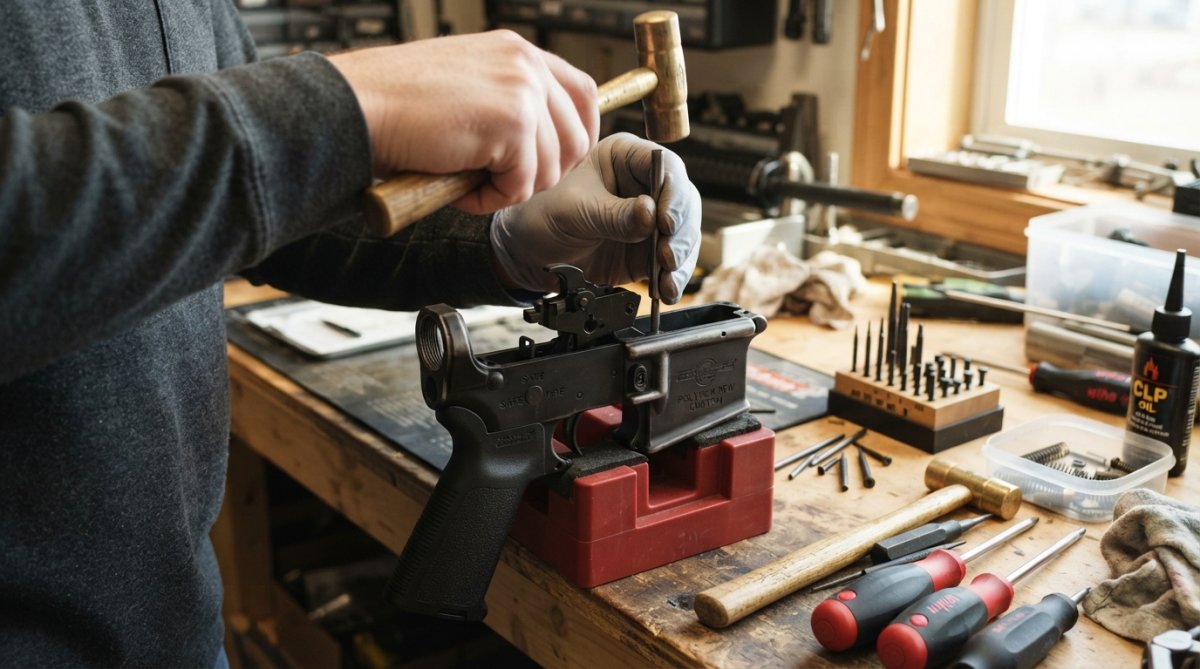
Installing a drop-in trigger is straightforward. The entire assembly goes in as one unit with no individual spring pins or sear replacement needed.
What You’ll Need Before Starting
Gather these items: your drop-in trigger assembly, lower receiver, punch or drift pin, screwdrivers (Phillips and flat-head), anti-walk pins, small container for removed pins, clean work surface with soft mat, and light lubricant.
Step-by-Step Installation Process
Step 1: Prepare the Lower Receiver
Remove the lower from your build if assembled, or start with a stripped lower. Ensure the lower is clean and free of debris.
Step 2: Remove the Factory Trigger Assembly
Locate the trigger pin holes behind the trigger guard. Use your punch to drive out the existing pins with light pressure. Remove the factory trigger assembly and set the pins aside.
Step 3: Install the New Trigger Assembly
Position your new drop-in trigger into the lower. The assembly should slide in smoothly. If there’s resistance, stop and check alignment, forcing it can damage the trigger or lower.
Step 4: Install the New Pins
Use the anti-walk pins included with quality triggers. Slide them through the holes to secure the trigger assembly. They should go in smoothly.
Step 5: Function Check
Before reassembling your rifle, manually cycle the action without the bolt or carrier group. Pull the trigger, it should break cleanly. Release and verify the trigger resets audibly. Repeat several times.
Step 6: Reassemble
Install your bolt carrier group, charging handle, and upper receiver. Do a final function check with the complete rifle and dry fire a few times in a safe direction.
Common Installation Mistakes to Avoid
Forcing the trigger into the lower. If it doesn’t slide smoothly, stop and check alignment. A forced installation can crack components.
Losing the pins. Use a small container or tape pins to a card.
Skipping the function check. This takes two minutes and catches 90% of installation issues before you fire a round.
Over-tightening the pins. Snug is sufficient; over-tightening can damage pin holes or pins.
Forgetting lubricant. Apply a light coat of trigger lubricant to sear surfaces to help the trigger break in smoothly.
Adjustability and Customization: What to Expect
Fixed triggers (like Timney Impact or CMC Original) come set from the factory with predetermined pull weight and overtravel. The advantage is simplicity; the disadvantage is you’re committed to factory settings. Adjustable triggers (like Elftmann ELF APEX or HIPERFIRE HIPERTOUCH) let you dial in pull weight, overtravel, and sometimes sear engagement without removing the lower. This flexibility is valuable if you shoot multiple platforms or want to fine-tune feel.
Two-stage triggers often allow independent adjustment of the first and second stages. Most triggers feel slightly different for the first 100-200 rounds as sear surfaces polish themselves (peer-reviewed research). By round 300, the trigger has settled into its final feel.
Durability and Long-Term Performance in Field Conditions
The best trigger works the same on round one and round 5,000. Quality triggers use hardened tool steel or stainless steel for sear surfaces, resisting wear and maintaining dimensional consistency. Anodized aluminum housings protect against corrosion while keeping weight minimal. Internal springs are heat-treated to resist fatigue.
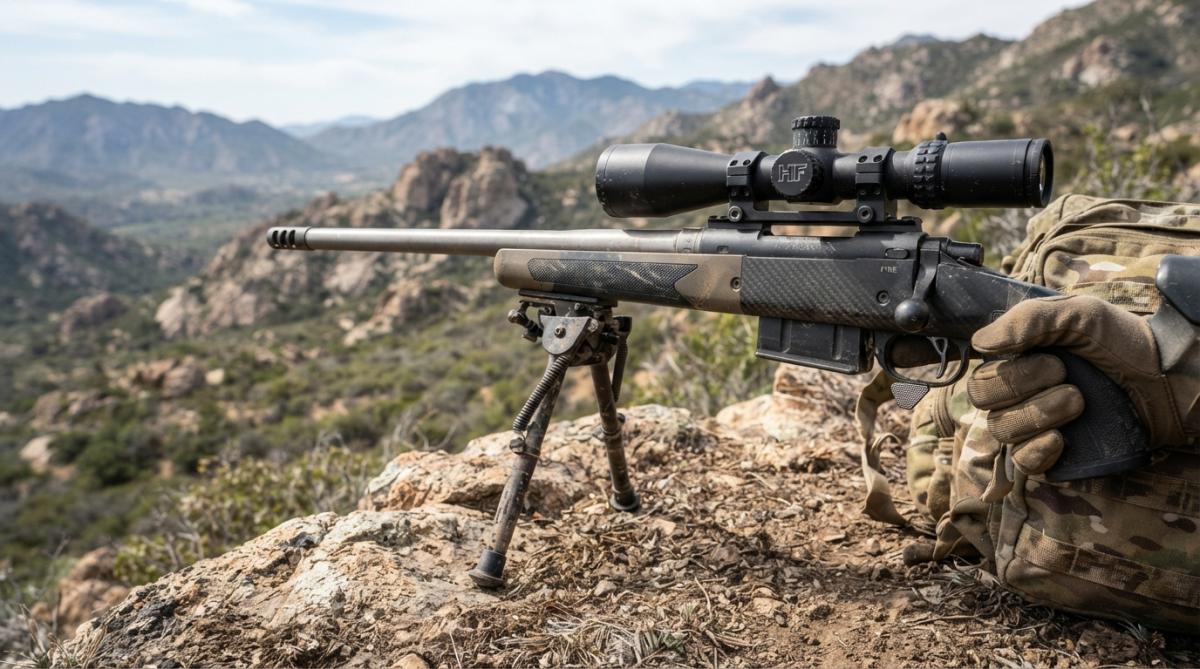
Temperature extremes test reliability. Quality triggers maintain consistency across temperature ranges because materials and spring tensions are engineered for stability. Budget triggers sometimes show pull-weight drift in cold conditions (nssf.org). Moisture and salt exposure accelerate wear on low-quality triggers, while triggers from manufacturers like Geissele, CMC, and Rise Armament handle harsh environments through stainless internals and proper surface finishing.
A trigger’s durability depends on maintenance. Light lubrication during cleaning prevents corrosion. Regular function checks catch wear early. Proper storage extends life significantly. A $200 trigger with proper maintenance will outlast a $100 trigger that gets neglected. Quality triggers degrade gracefully (creep increases slowly, pull weight drifts slightly) rather than catastrophically.
Choosing the right trigger comes down to your priorities. Building on a budget? The Timney Impact or James Madison Tactical Black OPS EVO delivers reliability. Chasing precision? The Geissele SSA-E or Bix’n Andy Tacsport sets the standard. Want adjustability without premium pricing? The Elftmann ELF APEX balances customization and cost.
At Polymer Pew, we understand that the trigger is where precision happens. Our drop-in kits and components are engineered for the same consistency and durability that makes quality triggers essential. Whether you’re installing a TriggerTech alternative or building your entire lower, our aluminum MKE receivers and flat trigger options are designed to work seamlessly with industry-standard triggers. Get your precision components here and build with confidence.
Frequently Asked Questions
Are TriggerTech alternatives worth the investment for custom builds?
Yes, many TriggerTech alternatives deliver comparable performance at lower price points. Single-stage triggers like the Rise Armament Rave 140 and CMC Original offer crisp breaks and fast resets for competition or tactical use. Two-stage options like the Geissele SSA-E provide precision for long-range shooting. The choice depends on your build’s purpose: competitive shooting, hunting, or precision rifle work. Budget-conscious builders often find alternatives deliver solid performance at a lower cost, especially for drop-in compatibility and reliability.
How do I know a drop-in trigger will actually fit my custom action without modifications?
Compatibility depends on your lower receiver type and action. Most AR-15 drop-in triggers work with standard mil-spec lowers, but custom actions like those used in precision rifle builds may require fitting. Check the manufacturer’s compatibility list before purchasing. Test-fit the trigger assembly in your lower without tightening pins first. If the trigger shoe binds or the sear doesn’t align properly, you may need to hand-fit the trigger or seek professional gunsmithing. Polymer Pew’s MKE lowers are tested for variant compatibility, reducing fitment issues for clone builds.
What’s the difference between single-stage and two-stage triggers for custom builds?
Single-stage triggers break immediately when you press the trigger shoe, offering faster follow-up shots and minimal reset travel. They’re ideal for competitive shooting and tactical applications. Two-stage triggers have a light first stage (take-up) followed by a distinct second stage break, providing better control and precision for long-range and hunting applications. Single-stage triggers are typically more affordable and easier to install as drop-in kits. Two-stage triggers reward careful trigger control and consistency, making them preferred for precision rifle builds where shot placement matters more than speed.
Can aftermarket triggers improve accuracy in a custom rifle?
Yes, but indirectly. A quality aftermarket trigger improves consistency and control, which helps shooters deliver repeatable shots. Triggers with crisp breaks and minimal creep reduce the chance of disturbing sight picture during the firing sequence. Adjustable triggers let you fine-tune pull weight and overtravel to suit your technique. However, the trigger is one component among many, barrel quality, action fit, and shooter skill matter just as much. Expect noticeable improvement if you’re upgrading from a mil-spec trigger, but don’t expect a poor-quality barrel to suddenly shoot tight groups just because you installed a precision trigger.
How long will aftermarket triggers actually last in field conditions?
Quality aftermarket triggers last thousands of rounds when properly maintained. Hardened stainless steel and anodized aluminum construction resists wear and corrosion. Most triggers show minimal wear after 5,000-10,000 rounds of typical use. Extreme environments, salt spray, mud, or rapid-fire competition, accelerate wear on springs and sear surfaces. Regular cleaning and light lubrication extend lifespan significantly. Triggers with DLC coatings (like Velocity Triggers) offer enhanced durability in harsh conditions. If a trigger fails prematurely, it’s usually due to defective manufacturing or improper installation rather than design. Reputable manufacturers stand behind their products with warranties.
This article was written using GrandRanker