Table of Contents
- What Trigger Pull Weight Actually Changes
- The Core Benefits of a Lighter AR-15 Trigger
- Single-Stage vs Two-Stage AR Triggers: Which Fits Your Build
- Choosing the Best AR-15 Trigger for Home Defense
- How to Install an AR-15 Drop-In Trigger
- Safety Risks and Liability With Lighter Triggers
- Mechanical Wear, Maintenance, and Long-Term Reliability
- Conclusion
- Frequently Asked Questions
Last Updated: September 17, 2026
What Trigger Pull Weight Actually Changes
Trigger pull weight is the force required to release the hammer or striker, measured in pounds, and it is the biggest factor separating a mil-spec trigger from a performance one.
Creep, Take-Up, and Overtravel Explained
Creep is the distance the trigger moves after the sear begins to disengage but before the hammer drops. It feels spongy and unpredictable, making it hard to know when the shot will break.
The Core Benefits of a Lighter AR-15 Trigger
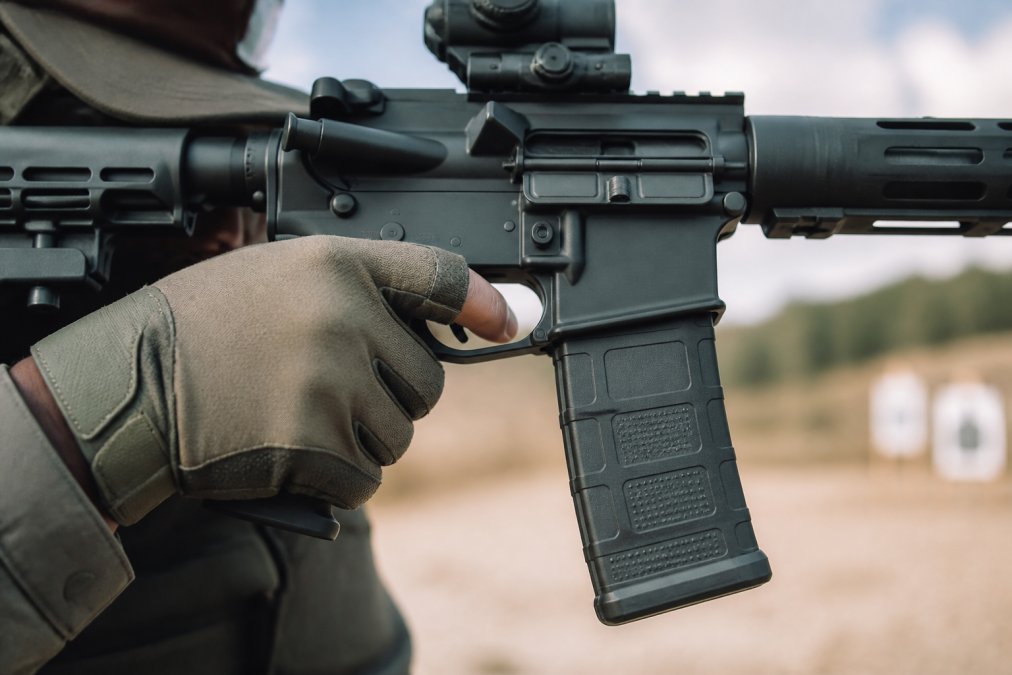
The main benefit of a lighter AR-15 trigger is a measurable reduction in the input required to break the shot, which means less disturbance of the sight picture.
Accuracy and Shot Placement
A lighter trigger reduces movement transferred to the rifle during the break. That matters most at distance, where a fraction of an inch of muzzle movement becomes a miss on small steel. Shooters working precision stages see the difference immediately.
Split Times and Target Transition Speed
Split times measure the interval between shots on the same target; target transition is the time to move between targets. A shorter reset and lighter break shorten both, which is why competitive disciplines reward a clean, light trigger. The gain compounds over a 30-round stage.
A lighter trigger does not make you faster by itself. It removes the input that was slowing you down, and only if reset and overtravel are tuned to match.
Single-Stage vs Two-Stage AR Triggers: Which Fits Your Build
A single-stage trigger breaks with one continuous motion and almost no take-up, suiting fast, close-range work. A two-stage trigger has a distinct first stage and a defined wall before the break, suiting precision and long-range shooting where you want a predictable break point.
| Feature | Single-Stage | Two-Stage |
|---|---|---|
| Take-up | Minimal | Defined first stage |
| Break feel | Immediate | Wall then break |
| Best for | Speed, close range | Precision, long range |
| Learning curve | Low | Moderate |
| Reset | Short | Slightly longer |
Choosing the Best AR-15 Trigger for Home Defense
The best AR-15 trigger for home defense balances a lighter, cleaner break with reliability and a pull heavy enough to resist an unintentional discharge under adrenaline. A defensive rifle is not a race gun; you are managing a high-stress situation in poor light, not chasing split times.
Chasing an extremely light trigger on a defensive rifle is a genuine liability. Under stress, a very light pull with no take-up gives your finger almost no margin before the shot breaks, which raises the risk of an unintentional discharge.
How to Install an AR-15 Drop-In Trigger
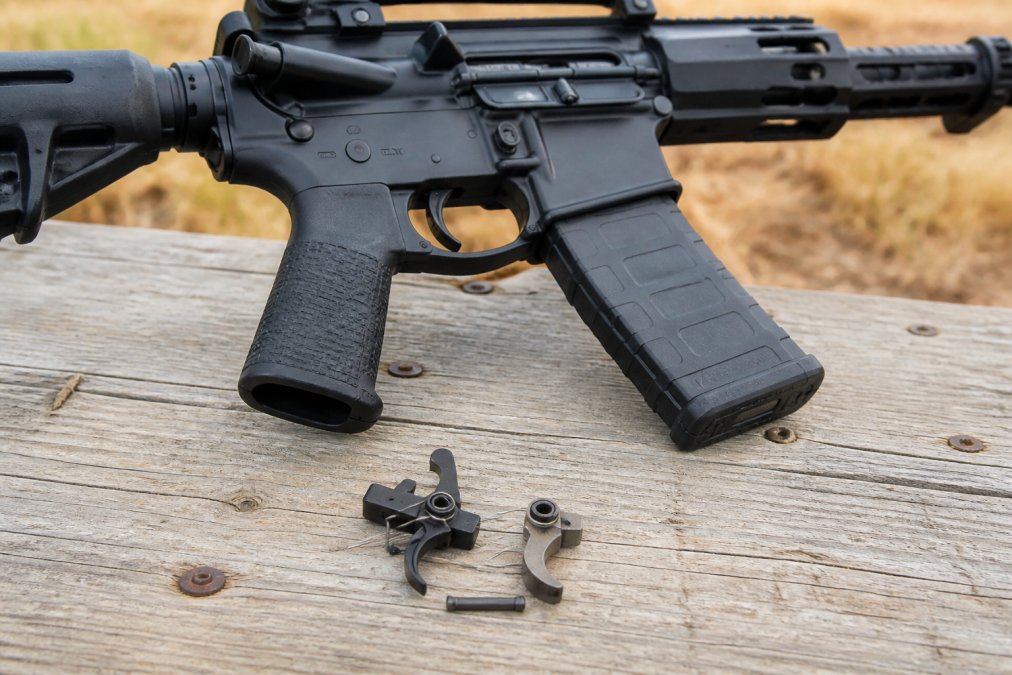
Installing an AR-15 drop-in trigger takes about 15 to 30 minutes for a first-timer and requires no machining, because the fire control group arrives as a self-contained unit.
What you’ll need:
- A drop-in trigger assembly
- A punch set and a small hammer
- A clean work surface and good lighting
Steps:
- Clear the rifle completely and remove the upper receiver from the lower.
- Drive out the trigger and hammer pins.
- Remove the old trigger, hammer, and springs.
- Insert the drop-in unit and align it in the receiver pocket.
- Reinstall the pins and confirm the safety functions correctly.
- Function-check with an empty chamber before loading anything.
Safety Risks and Liability With Lighter Triggers
A lighter trigger does not create a legal problem by itself. What creates exposure is an untested or undocumented modification to the fire control group, showing up in criminal review, civil litigation, and insurance coverage.
The Real Mechanism of Risk
The risk is not pull weight but the combination of a short, light break with a shooter under adrenaline. A mil-spec trigger ships in the 5.5 to 8.5 pound range, and that weight is part of the rifle’s margin against a sympathetic or startled pull. Drop below roughly 3 pounds with no take-up, and the margin between “finger on the trigger” and “shot fired” narrows to almost nothing.
How a Modification Is Treated After an Incident
Investigators and opposing counsel routinely examine whether a firearm was modified from its factory configuration. A modified trigger does not make a defensive use unlawful, and no federal statute prohibits owning or installing an aftermarket trigger. But in a civil suit, the other side will argue the modification showed disregard for safety. Your best defense is documentation and function testing.
What to document and verify:
- The exact make and model of the trigger unit you installed.
- The measured pull weight, checked with a trigger gauge, recorded on the date of install.
- A function check with an empty chamber: safety engages in both positions, the hammer does not drop when the rifle is bumped, and the disconnector catches the hammer on a slow trigger release.
- A drop test with an empty chamber and the safety engaged.
- Any range session where the trigger was confirmed reliable before the rifle was staged for defense.
A “hair trigger” is not a legal category, it is a description a plaintiff’s attorney uses. The defense is a documented, tested, reliable unit, not a low number on a box.
Insurance and Policy Considerations
Homeowner’s and renter’s policies generally cover accidental discharge claims, but coverage can be contested if the firearm was modified in a way the insurer argues was negligent. Specifics vary by policy and state. If you carry a defensive rifle, read your policy’s exclusions and, if unclear, ask your agent in writing whether aftermarket fire control parts affect coverage.
Defensive vs. Competition: Two Different Risk Profiles
On a competition line, a light trigger is expected: range rules, a range officer, and a known direction of fire contain the risk. In a home-defense role, none of those controls exist. The same 3-pound trigger that is an asset on a timer is a liability in a hallway.
A practical split:
- Home defense: single-stage, short reset, moderate pull weight, proven reliability, documented function checks.
- Competition: light single-stage or two-stage, tuned reset, matched to division rules.
- Never: a home-brewed spring swap with no gauge reading and no function test.
state firearm modification and self-defense legal resources
Mechanical Wear, Maintenance, and Long-Term Reliability
A lighter trigger changes the forces inside the fire control group, driving a different wear pattern than a mil-spec setup. Understanding the mechanism separates a trigger that runs for years from one that goes soft after a few thousand rounds.
Why Lighter Triggers Wear Differently
Two design choices produce most light triggers: reduced sear engagement area, and lighter springs. Both concentrate or redistribute force.
Materials That Hold Up
The parts that survive a light trigger share a few traits:
- Hardened stainless steel sear and hammer surfaces resist galling far better than unhardened carbon steel.
- Anodized aluminum housings resist deformation at the pin holes, where drop-in units commonly loosen.
- Coated or nitrided contact surfaces reduce friction without relying on a thin surface polish that wears through.
Soft, unhardened parts are the most common failure point on budget triggers. They may gauge correctly on day one and drift within a few hundred rounds.
Inspection Criteria and Service Intervals
There is no universal round count, because fouling, ammunition, and use vary. A practical schedule for a rifle with regular range use:
- Every 500 to 1,000 rounds: field-strip the lower, wipe the fire control group, and re-lubricate lightly.
- Every 2,000 to 3,000 rounds: inspect sear and hammer engagement surfaces under bright light for galling, rounding, or a visible wear step.
- Every 3,000 to 5,000 rounds, or at the first sign of change: re-measure pull weight with a trigger gauge and compare to your install record.
- At any point: if the trigger feels gritty, the reset changes, or the pull weight drifts, stop and inspect before firing again.
What to look for during inspection:
- A polished, even contact patch is normal. A gouged or stepped surface is not.
- The disconnector should catch the hammer on a slow trigger release every time.
- The safety should engage positively with the hammer cocked.
- Pins should seat with light taps, not force, and should not walk out under recoil.
Keep a written log: install date, measured pull weight, round count at each inspection, and any parts replaced. When a trigger starts feeling different, the log tells you whether it is wear or fouling, and it is the same record that protects you in the liability discussion above.
Lubrication and Cleaning
Light triggers are less tolerant of grit than heavy ones, because a lighter spring has less force to overcome contamination. Apply a light coat of quality firearm lubricant on the sear and hammer contact points, and keep solvent away from sear surfaces, solvent strips lubricant and leaves bare metal to gall.
When to Replace Rather Than Adjust
If pull weight has drifted more than a small amount from your install record, or you can see a wear step on the sear, replacement is the correct answer. Adjusting a worn sear to restore a light break removes more material and accelerates the problem. Springs are consumables, replace them at the first sign of fatigue.
Conclusion
The benefits of a lighter AR-15 trigger come down to control: less input, less muzzle movement, faster resets, and more consistent shot placement. But weight alone is not the whole story, and a light trigger with poor sear engagement or sloppy tolerances will disappoint you.
Frequently Asked Questions
Is a lighter trigger actually better for accuracy?
A lighter trigger reduces the force your finger applies to the rifle, which lowers muzzle movement during the break. Less movement means tighter groups, especially at distance. That said, accuracy also depends on your grip, follow-through, and the trigger’s consistency. A lighter pull only helps if it breaks cleanly and resets predictably. Grittiness or inconsistent sear engagement will hurt accuracy more than a heavy but crisp trigger.
What is the ideal trigger pull weight for a defensive AR-15?
For home defense, most shooters land between 4 and 5 pounds. That range is light enough for fast, accurate shots under stress but heavy enough to reduce the risk of an accidental discharge when your heart rate is up and your finger discipline slips. Competition setups often run 2.5 to 3.5 pounds, but those are range-only guns. If your rifle doubles as a defensive tool, stay closer to 4.5 pounds.
Does a lighter trigger increase the risk of accidental discharge?
It can if you go too light or skip proper testing. A very light trigger with short sear engagement is less forgiving of bumps, drops, or poor finger discipline. The bigger risk is a poorly fitted drop-in unit that doesn’t fully engage the sear. Test any new trigger with the rifle unloaded, drop it on a padded surface from waist height, and confirm the hammer doesn’t fall. If it does, the trigger isn’t safe to carry.
Are drop-in triggers worth it compared to a spring kit?
A spring kit is the cheapest way to lighten pull weight, but it only changes spring tension. It won’t fix creep, grittiness, or a long reset. A drop-in trigger replaces the entire fire control group with a self-contained housing, so you get a cleaner break, shorter reset, and more consistent pull weight. If you shoot often or compete, the drop-in is the better long-term investment. For a plinking rifle, a spring kit may be enough.