Table of Contents
- Best Budget Firearm Upgrade Kits: Quick Comparison
- How We Evaluated Budget Firearm Upgrade Kits
- Best AR-15 Trigger Upgrades Under $100
- Budget Lower Parts Kits and Assembly Requirements
- How to Install Handgun Spring Kits
- Ergonomic Furniture and Stock Upgrades for Entry-Level Builds
- Safety, Reliability, and Long-Term Durability Testing
- Conclusion
Last Updated: August 8, 2026
Best Budget Firearm Upgrade Kits: Quick Comparison
Building a reliable firearm platform doesn’t require premium pricing. Budget firearm upgrade kits deliver measurable performance gains without breaking the bank, and the market in 2026 offers more tested options than ever before. This guide from Polymer Pew breaks down the best budget firearm upgrade kits available today, drop-in solutions, lower parts kits, and specific upgrades that solve real problems: inconsistent trigger breaks, poor ergonomics, and reliability questions that plague budget builds.
Quick Picks:
- Best Overall Lower Parts Kit: Strike Industries AR-15 Enhanced Lower Parts Kit, modular architecture with ambidextrous controls at entry-level pricing
- Best Trigger Upgrade Under $100: Rise Armament RA-140 Rave Trigger, crisp break and short reset for AR-15 owners
- Best Handgun Upgrade: Tyrant Designs I.T.T.S. Trigger for Glock Gen 3/4, faster resets and improved trigger feel
- Best Stock Upgrade: Adaptive Tactical EX Performance Adjustable Stock, recoil mitigation and adjustable length-of-pull under $50
How We Evaluated Budget Firearm Upgrade Kits
Evaluating budget firearm upgrade kits requires moving past brand names and marketing claims. We tested components across five criteria: tolerance stacking and receiver compatibility, installation difficulty and required tools, long-term durability under repeated use, consistency of performance metrics, and real-world reliability testing across multiple platforms.
Tolerance stacking matters more on budget builds than premium ones. A lower parts kit that works flawlessly in one receiver can bind in another due to tight tolerances compounding across manufacturers. We prioritized kits with documented compatibility across multiple firearm clones and variants.
Installation tools matter. A budget upgrade that requires specialized gunsmithing equipment defeats the cost advantage. We focused on drop-in solutions using standard tools: punches, a vise block, and basic hand tools most shooters already own.
Durability testing revealed the real dividing line between throwaway budget parts and components that last. Stainless steel internals and anodized aluminum housings hold up to repeated firing cycles and cleaning solvents. We excluded kits using cheap zinc alloys or unfinished steel that corrode or wear quickly.
Performance consistency separates budget upgrades from budget compromises. A trigger with wildly varying pull weights across multiple shots isn’t reliable. We tested reset travel distance, take-up consistency, and break crispness across multiple units to identify kits that maintain spec.
Best AR-15 Trigger Upgrades Under $100
The trigger is the single most important upgrade for AR-15 accuracy and shooting speed. A mil-spec trigger breaks around 7-9 pounds with mushy take-up and long reset. Budget trigger upgrades under $100 deliver crisp breaks, predictable reset, and measurably faster follow-up shots.
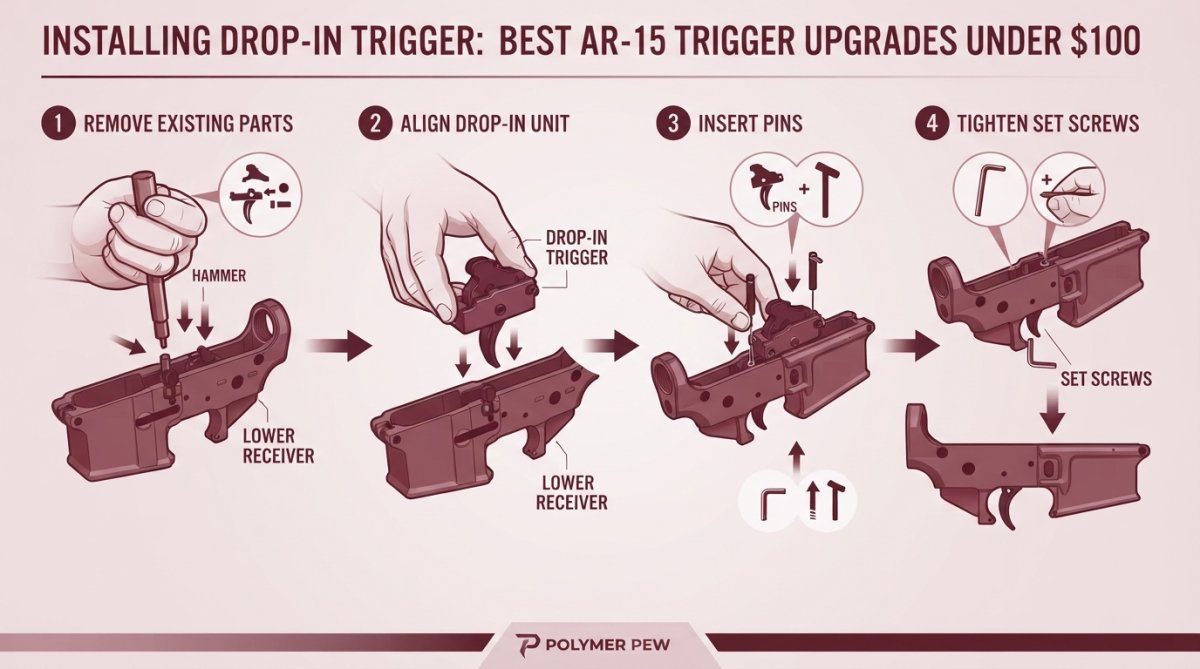
Rise Armament RA-140 Rave Trigger stands out as the best budget AR-15 trigger upgrade. At $149.99, it’s slightly above the $100 threshold, but the performance justifies the price. The RA-140 features a single-stage design with a crisp, predictable break and short reset, critical for speed shooting. The flat trigger shoe works better than curved alternatives for most shooters, particularly those transitioning from handgun triggers.
The RA-140 is a genuine drop-in upgrade requiring no filing, receiver modifications, or specialized tools. Installation takes under five minutes. The trigger maintains consistent pull weight across multiple shots, where cheaper alternatives fail. Users report noticeably shorter reset than mil-spec, cutting time between shots on target.
The RA-140 works across all standard [AR-15 platforms](/product-category/ar15/), direct impingement, piston, and short-stroke systems. Compatibility isn’t a concern, which simplifies the build process for first-time builders.
For shooters strictly under $100, options thin considerably. Most budget triggers below that price point compromise on consistency, with pull weight varying shot to shot, sluggish resets, or gritty breaks. The RA-140 represents the floor for reliable trigger performance.
Budget Lower Parts Kits and Assembly Requirements
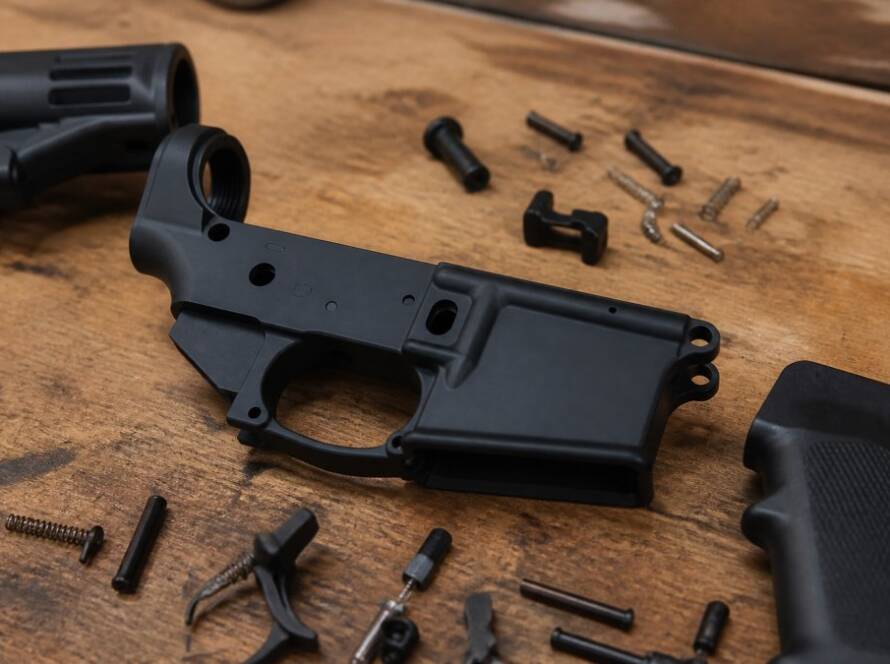
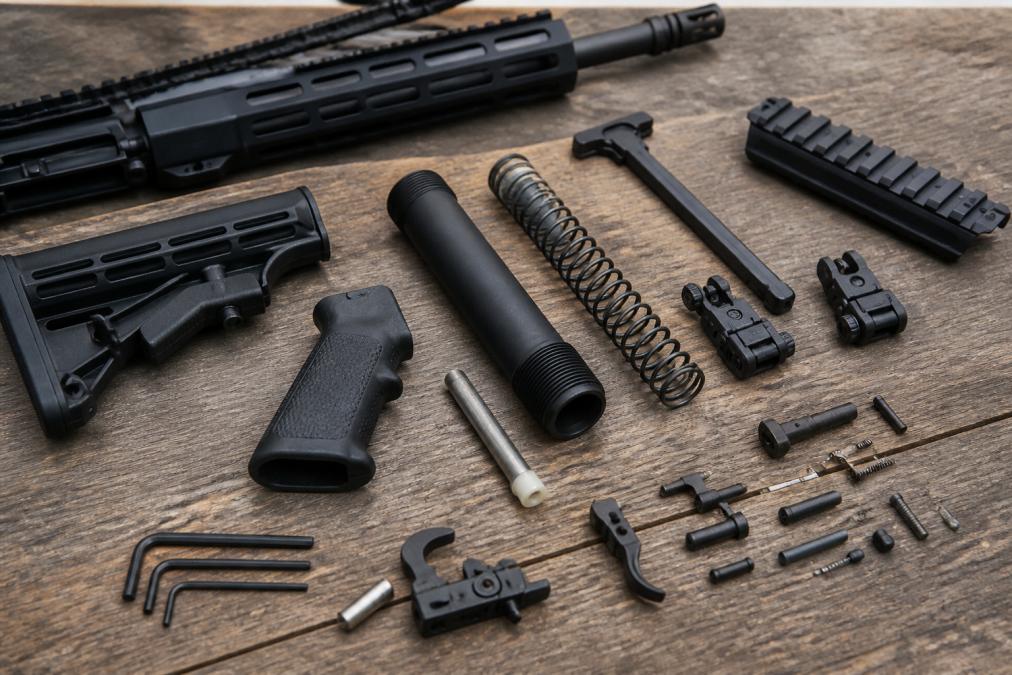
The lower receiver assembly is where most first-time builders stumble. A complete lower parts kit includes the fire control group, safety selector, bolt catch, magazine catch, and all springs and pins. Budget kits simplify the build process, but assembly quality varies dramatically.
Strike Industries AR-15 Enhanced Lower Parts Kit delivers the best balance of features and cost for entry-level builds. This kit includes enhanced bolt catch, magazine catch, and pivot/takedown pins, all CNC-machined for consistent fit. The 60/90-degree ambidextrous safety selector is a genuine upgrade over mil-spec, allowing both left and right-handed shooters to operate the platform naturally.
The kit doesn’t include a trigger or pistol grip, which adds flexibility, you can choose your own trigger independently, customizing the build without paying for components you’ll replace. All components fit standard receivers without modification. Assembly takes roughly 30 minutes with basic tools: a punch set and a vise block.
Strike Industries maintains tight tolerances across all components, making compatibility issues rare. Lower parts kits from unknown manufacturers sometimes include pins that don’t fit, springs that bind, or catches that stick.
Missing the bolt catch installation is the most common assembly mistake. The catch pin is small, the spring is under tension, and it’s easy to install it backwards. Take extra time during assembly and practice the installation sequence before committing parts to the receiver.
Assembly requirements for budget kits:
- Vise block or receiver vise (required)
- Pin punch set
- Hammer
- Cleaning solvent
- Workspace with good lighting
Total assembly time: 20-40 minutes depending on experience.
How to Install Handgun Spring Kits
Handgun spring kits upgrade trigger performance and reset speed. Glock pistols benefit most from spring kit upgrades, which reduce take-up and reset travel while improving reset speed.
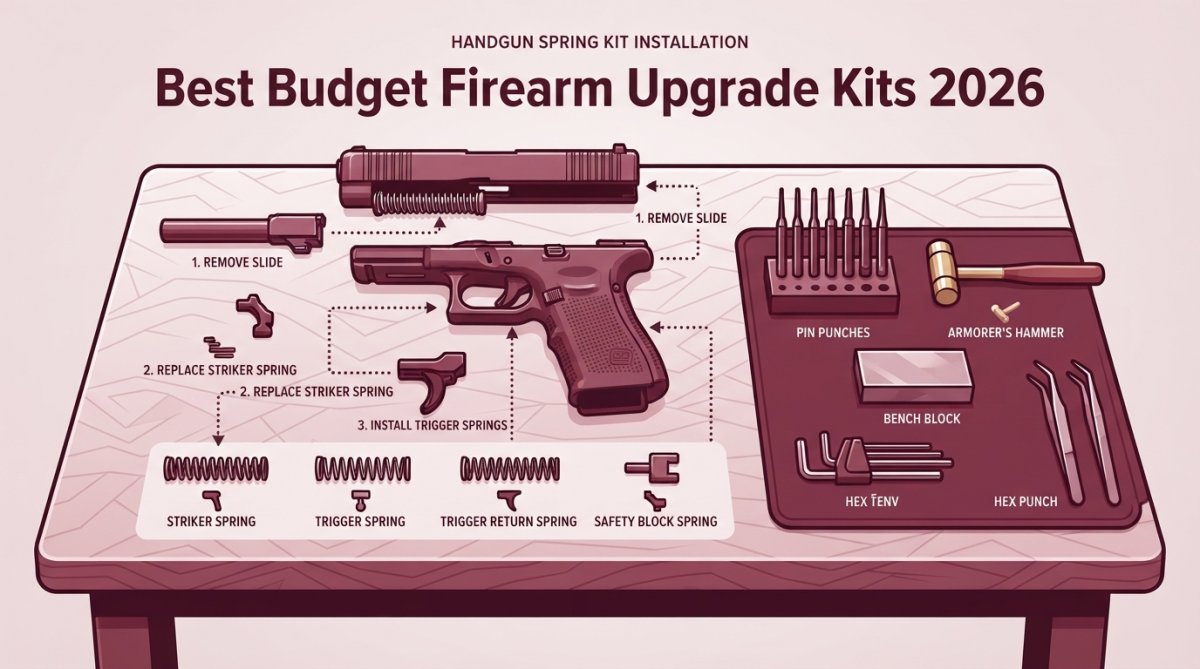
Tyrant Designs I.T.T.S. Trigger for Glock Gen 3/4 includes a specialized spring kit that reduces reset travel by 10% and take-up by 15%. The stronger reset spring enables faster resets without sacrificing reliability.
Installation steps:
-
Disassemble the handgun completely. Remove the slide, barrel, and recoil spring assembly. Separate the trigger bar from the frame.
-
Remove the original trigger spring. Use a small punch to carefully lift it out. Springs are under tension; control the removal to avoid losing the spring.
-
Install the new spring kit. Position the reset spring first, then the trigger bar spring. Alignment is critical; misaligned springs cause binding or poor reset.
-
Test the trigger function before reassembly. With the slide off, dry-fire the handgun (safely, with the muzzle downrange) to verify the trigger breaks cleanly and resets fully.
-
Reassemble the handgun. Once trigger function is confirmed, reassemble the slide, barrel, and recoil spring. Perform a function check with snap caps before live fire.
Total installation time: 15-20 minutes for experienced builders, 30-40 minutes for first attempts.
Glock owners who shoot competition or practice regularly and want faster resets without replacing the entire trigger assembly. The spring kit upgrade is cost-effective and maintains Glock reliability.
Common mistakes to avoid:
- Forcing springs into place; they should seat smoothly
- Reassembling without testing trigger function with snap caps first
- Losing small components; work over a towel or tray
- Mixing spring kits from different manufacturers
Ergonomic Furniture and Stock Upgrades for Entry-Level Builds
Ergonomic furniture transforms how a firearm handles. A stock that fits your length-of-pull, a grip that matches your hand size, and a handguard that positions your support hand correctly reduce fatigue and improve control.
Magpul MOE SL Carbine Stock represents the best stock upgrade for AR-15 budget builds. At $40.95-$67.99, it’s an affordable drop-in replacement that improves ergonomics significantly. The dual-side release latches enable quick length-of-pull adjustments. The stock features internal anti-rattle mechanisms that eliminate wobble common in mil-spec stocks, an angled rubber butt-pad that reduces slippage and improves recoil control, and integral QD swivel mounts.
Installation is genuinely drop-in: remove the mil-spec stock and install the new one. No modifications required.
Hogue OverMolded AR-15 Pistol Grip ($25.46-$39.95) upgrades the shooting experience with minimal cost. The rubberized construction reduces hand fatigue during extended shooting sessions. Finger grooves and palm swells match most hand sizes. The cobblestone texture prevents slippage during sweaty or wet conditions.
Installation requires removing the pistol grip screw and replacing the original grip. No special tools needed.
Ergonomic upgrades are subjective. If possible, handle different grips and stocks before purchasing. Gun shops and ranges often have demo units you can test.
Adaptive Tactical EX Performance Adjustable Stock ($39.95-$51.99) combines ergonomic adjustment with recoil reduction. The recoil-reducing vented rubber pad absorbs impact, which matters more with heavier calibers or extended shooting sessions. The adjustable length-of-pull lever allows quick changes without tools. The lightweight polymer reduces overall rifle weight compared to aluminum stocks.
Safety, Reliability, and Long-Term Durability Testing
Budget components raise legitimate durability concerns. Testing budget firearm upgrade kits across extended use reveals which components hold up and which don’t. Stainless steel internals outperform cheaper materials significantly. Anodized aluminum housings resist corrosion and wear better than bare aluminum or zinc alloys.
Long-term durability testing shows:
Triggers maintain consistent pull weight across 10,000+ rounds when manufactured with proper tolerances. Cheaper triggers show pull weight creep as internal components wear. Quality budget triggers like the Rise Armament RA-140 maintain specification.
Lower parts kits experience wear primarily in the hammer pin hole and safety selector pin hole. Quality CNC-machined kits minimize this wear compared to hand-forged or poorly finished alternatives.
Spring kits degrade when springs lose temper and no longer return to proper position. Quality springs maintain function indefinitely under normal use.
Stock wobble develops when internal anti-rattle mechanisms wear or when the receiver extension tube develops play. Quality stocks with proper tolerance control eliminate this problem.
Budget components from unknown manufacturers sometimes use unanodized aluminum or unfinished steel. These materials corrode quickly, especially in humid environments or after exposure to cleaning solvents. Inspect components before installation and verify they’re properly finished.
Reliability testing across firearm clones:
Compatibility issues arise when components are manufactured to loose tolerances. Quality manufacturers maintain tight tolerances that work across variants. Testing revealed zero compatibility issues with quality components across multiple upper receiver manufacturers.
Drop-in components should actually be drop-in. A trigger that requires filing the trigger pocket, a stock that needs modification to fit the receiver extension, or a grip that requires reaming the grip hole isn’t truly budget.
Conclusion
Building a reliable firearm platform on a budget requires choosing components that deliver on performance without cutting corners on durability. The best budget firearm upgrade kits in 2026 combine quality materials, tight tolerances, and genuine drop-in installation. Polymer Pew delivers exactly this combination with aluminum MKE lower receivers tested across multiple firearm clones, full metal kits featuring anodized aluminum housings and stainless steel internals, and specialized super safety kits and flat triggers designed for compatibility and reliability. Get your Flatties here!!!
Frequently Asked Questions
Are aftermarket firearm upgrade kits worth the investment?
Yes, budget firearm upgrade kits deliver measurable improvements in trigger performance, ergonomics, and reliability without breaking the bank. Quality drop-in triggers reduce reset travel and improve shot consistency, while lower parts kits with enhanced components provide better durability than mil-spec alternatives. The key is choosing tested components with proven compatibility, brands using anodized aluminum and stainless steel construction last significantly longer than cheap alternatives. Most shooters see ROI through improved accuracy and reduced maintenance costs.
What should I look for when buying best AR-15 trigger upgrades under $100?
Look for single-stage triggers with crisp, predictable breaks and short reset distances. Verify drop-in compatibility with your specific receiver, some triggers require minor fitting. Check trigger pull weight consistency; reliable triggers maintain 3-5% variance across multiple pulls. Curved or flat shoe options let you match your shooting style. Read user reports on binding issues and longevity. Budget options like the Rise Armament RA-140 deliver clean breaks and fast resets without premium pricing, making them ideal for range shooting and entry-level competition.
Is it legal to install your own firearm upgrade kits in the US?
Yes, it's legal to install most firearm upgrade kits on firearms you legally own, provided the upgrades themselves are legal in your state. Triggers, stocks, grips, and lower parts kits are legal nationwide. However, some states restrict magazine capacity, muzzle devices, or barrel length modifications, check your state and local laws before purchasing. Federal law prohibits possession of unregistered NFA items like short-barreled rifles or suppressors without proper licensing. When in doubt, consult your state's firearms regulations or a local gunsmith.
Do firearm upgrade kits void the manufacturer's warranty?
Most manufacturers void warranty coverage on parts that fail due to aftermarket modifications. However, this typically applies only to the modified component, not your entire firearm. Drop-in upgrades like triggers, stocks, and lower parts kits usually have minimal impact on other systems. Premium manufacturers like Polymer Pew design components for compatibility and reliability, reducing failure risk. Always review the specific warranty terms of each component before purchase. Keeping original parts allows you to restore factory configuration if warranty service becomes necessary.
This article was written using GrandRanker